Brightness, balance and transformation from one of the kitchen’s most useful tools
There is a reason nearly every cuisine keeps a sour note within reach of the stove: a wedge of lemon, a splash of vinegar, a spoonful of yoghurt, tamarind, cultured pickles or tomatoes. Acidity is sometimes treated as a finishing flourish, yet it is one of the structures on which flavour depends. It can wake a dull dish, restrain richness, alter texture and preserve colour. Used carelessly, it can also make food harsh, curdled or oddly thin.
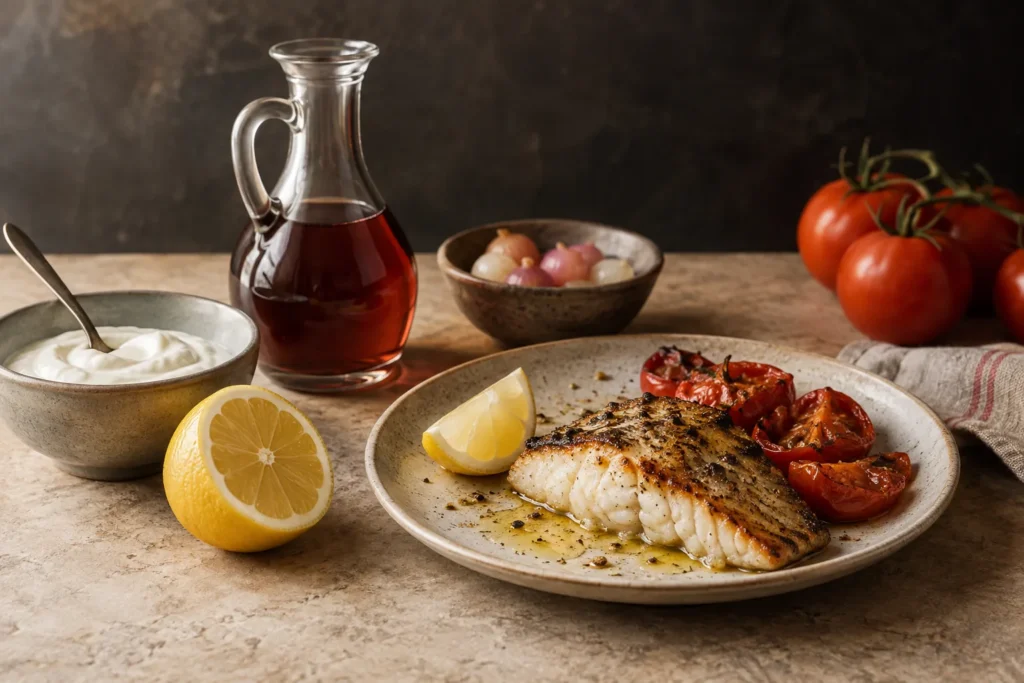
When a dish tastes flat, the reflex is often to add salt. Sometimes that is correct. Salt strengthens flavour and suppresses bitterness. Acid does something different. It introduces sourness and contrast, making flavours feel clearer rather than simply stronger. The useful question is not merely “does this need more seasoning?” but “is it under-seasoned, or does it lack contrast?” Test a spoonful with a drop of lemon or vinegar before changing the whole pan.
Salt and acid are not interchangeable corrections. A heavily salted dish can still taste leaden. A sharply acidic dish can still need salt. Learning which absence you are tasting is one of the quickest ways to become more deliberate at the stove.
Acid makes flavour easier to see
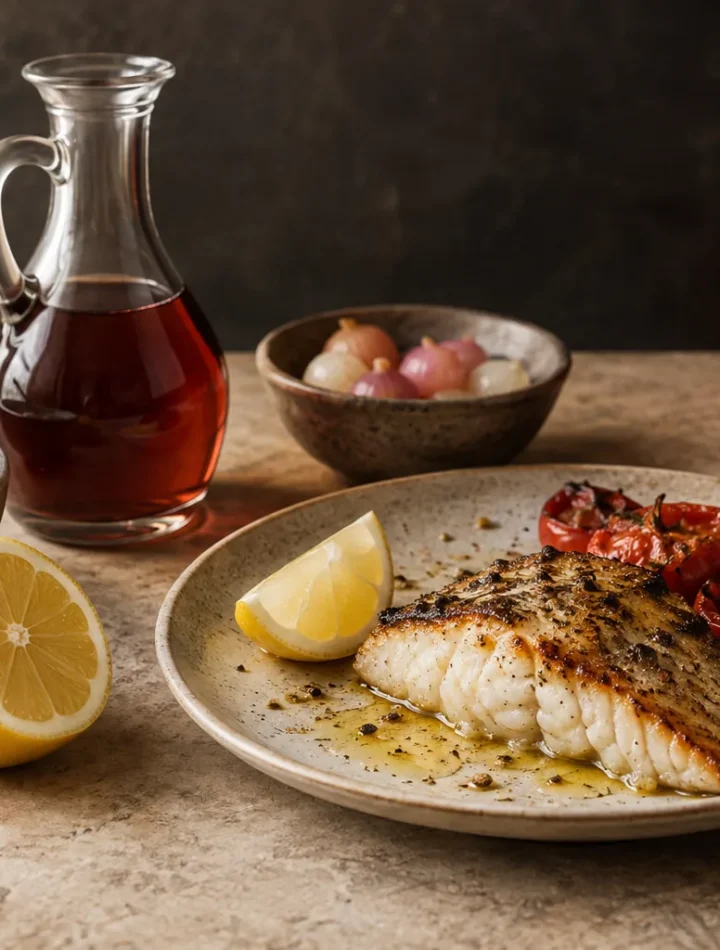
A final squeeze of lemon over grilled fish does not merely add lemon flavour. It changes the relationship between the fish, its fat, the browned surface and the salt already present. The result seems brighter because the palate receives contrast. A spoonful of vinegar stirred into lentils can make their earthiness more distinct. Lime through a rich coconut stew can separate flavours that had begun to merge.
This is why late acidity is conspicuous and useful. It arrives without having been softened by prolonged heat. In Grilled Sea Bass with Walnut Gremolata, the fresh elements at the end help the fish and walnuts retain their individual character. Tuna Steak with a Lemon Caper Sauce combines acidity with salinity and fat, allowing a small amount of sauce to carry across the plate.
Add acid in stages. Put some into the cooking where it can integrate, then reserve the possibility of a fresher adjustment at the end. This creates depth without sacrificing lift and prevents the common mistake of adding a large, panicked splash just before serving.
Acid balances richness, but does not erase it
Fat carries aroma and gives food persistence on the palate. It is part of what makes butter, cream, cheese and slow-cooked meat satisfying. Too much unbroken richness becomes tiring. Acid provides an edge against which that richness can be perceived. It does not remove the fat; it stops every mouthful feeling identical.
Think of lemon with butter, pickles with pâté, tomato with cheese, vinegar with slow-cooked pork, or yoghurt with spiced lamb. These pairings endure because they create movement between rich and sharp. Even Dauphinoise Potatoes, whose purpose is unapologetic comfort, benefits when served beside something crisp and acidic rather than another soft, creamy component.
Balance is not mathematical neutrality. A lemon tart should remain sour enough to be a lemon tart. A tomato sauce should retain its natural character. The aim is to make richness inviting for another mouthful, not to make the acid disappear.
Timing changes the character of acidity
Acid added early behaves differently from acid added late. Wine reduced in a pan loses raw alcoholic heat and becomes rounder as water evaporates and flavours concentrate. Tomatoes cooked slowly lose some of their bright, raw edge and become sweeter and more integrated. Vinegar stirred into a finished sauce remains more obvious and aromatic.
Early acid belongs when it must become part of the foundation: wine in a braise, tomato in a stew, vinegar in a long-cooked chutney. Late acid belongs when freshness is the point: lemon over seafood, lime through a soup, vinegar in a warm salad dressing. Tomato Chutney needs time for acidity, sweetness and spice to settle into one another. Fresh Homemade Lemonade depends on preserving a clearer, more immediate sharpness.
Heat can drive off delicate aromas even when sourness remains. Lemon zest and lemon juice therefore do different work. Zest carries aromatic oils from the coloured outer peel; juice brings acidity and water. Adding both at the same moment wastes the opportunity to use each where it is strongest.
Acid changes texture
Acidity affects proteins and plant tissues. In dairy, sufficient acid encourages proteins to gather into curds, the essential transformation in homemade Paneer. In marinades it can denature proteins at the surface of meat or fish. A short exposure may change texture; a long, strongly acidic marinade may leave the exterior mealy while doing far less to the centre than expected.
Ceviche makes this visible. Citrus changes the appearance and texture of seafood by denaturing proteins, but it should not be described as cooking in the same food-safety sense as heat. Acid does not reliably remove every microbial or parasitic hazard. Ceviche de Checo therefore depends on appropriately sourced seafood, scrupulous cold handling and the safety guidance relevant to the fish being used.
Acid also slows enzymatic browning in many cut fruits and vegetables, which is why lemon juice helps apples or avocados retain their colour. It can soften the pungency of sliced onion and alter vegetables during pickling. None of these effects is limitless. A little acid can preserve colour; too much dominates flavour. A quick pickle can retain crunch; a long one changes the vegetable more profoundly.
Choose the acid the dish already wants
Not every sour ingredient is interchangeable. Lemon is fragrant and direct. Lime is greener and often more assertive. Wine vinegars carry some character from their source wine. Cider vinegar brings fruitiness. Yoghurt offers acidity with body and dairy richness. Tomatoes add sweetness, savouriness and water alongside acid. Tamarind is sour but also dark, fruity and complex.
Choose by flavour first and strength second. If substituting vinegar for lemon, begin with less and dilute or balance as needed. If replacing wine in a sauce, remember that vinegar and water can supply acidity but cannot reproduce the wine’s full flavour. Taste the ingredient on its own before committing it to the dish.
Keep a modest arsenal rather than a museum: fresh lemons, one clean wine vinegar, a darker or fruitier vinegar, good tinned tomatoes and yoghurt cover a remarkable range. Taste before adding, add less than you think, stir thoroughly and taste again. When food feels heavy, sweet, muddy or strangely mute, acid may be the correction. The goal is not to make everything sour. It is to let everything else speak.