The quiet work that makes relaxed cooking possible
The most valuable ten minutes of any cooking session often happen before a single ingredient touches the pan. They are also the minutes most readily skipped. Starting feels productive: the oven goes on, the knife comes out and an onion is soon surrendering to the chopping board. Reading can feel like delay. In practice, a careful reading is what prevents the false urgency that arrives later, when the onions are colouring, the stock is still frozen and a line halfway down the method casually announces that the dough must rest for an hour.
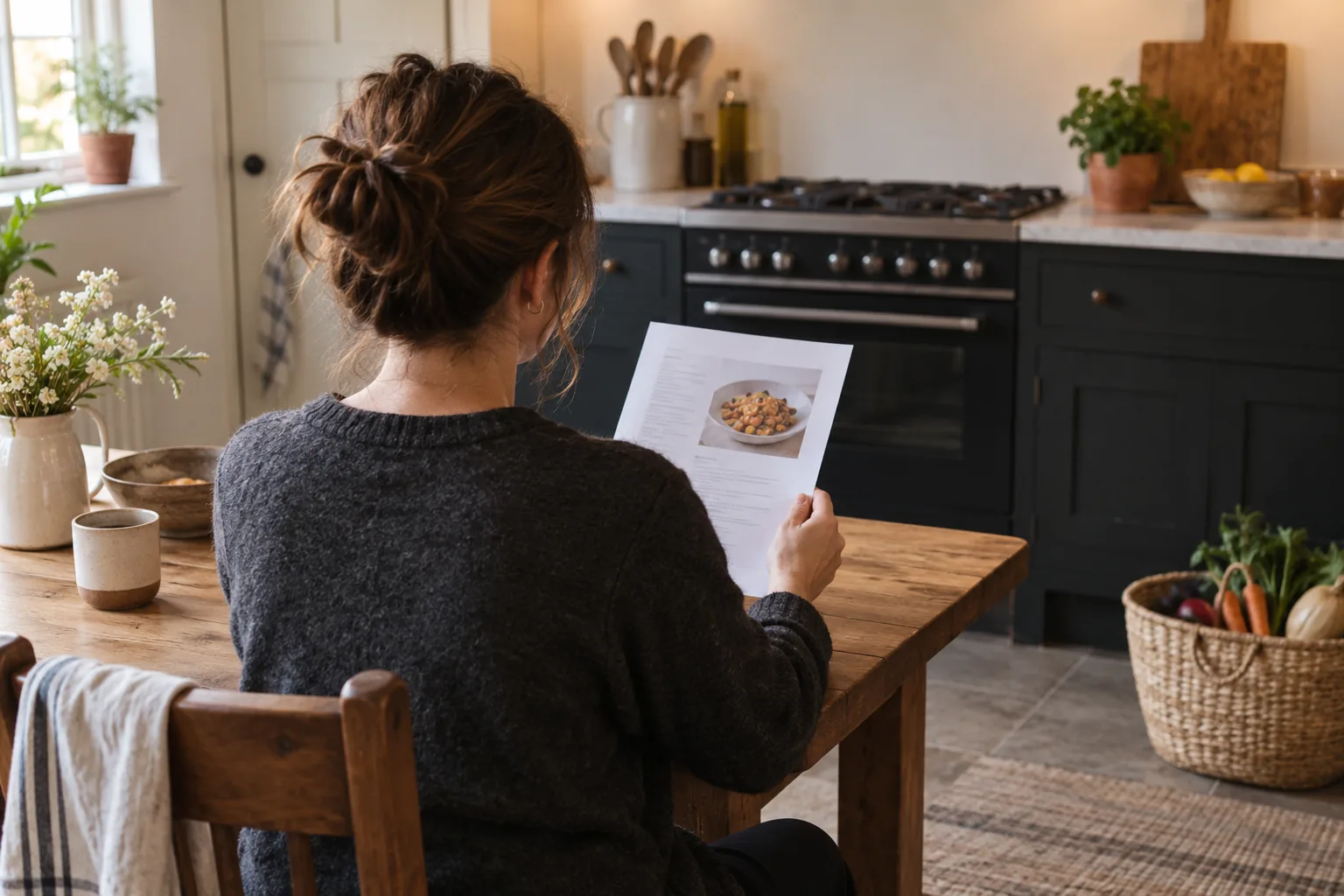
A recipe is not merely a list of instructions. It is a plan written in sequence, although the cooking itself may not unfold so neatly. Some jobs overlap. Some ingredients are divided and used twice. A sauce may need attention while vegetables roast; meat may need to rest while the final pan juices reduce. Reading the recipe properly means converting that written sequence into a mental picture of the whole session.
Read it once for the dish, then once for the work. The first reading tells you what you are making. The second tells you what the kitchen will ask of you. This is not about following orders or removing instinct from cooking. It is about knowing the landscape well enough to use judgement when the recipe and the real world inevitably part company.
Find the hidden time
Begin by marking every period when nothing appears to be happening but something important is. Marinating, proving, chilling, soaking, reducing, resting and coming to room temperature are all real parts of the cooking time. They may not appear in the headline figure, particularly in older recipes or those written for a cook already familiar with the method.
Dough is the obvious example. Chinese Steamed Buns need time not only for mixing and shaping, but also for the dough to develop and prove. That pause is not empty space to be shortened at whim. It changes the dough. The same principle applies when pastry must chill before rolling or cooked meat needs to rest before carving. A recipe described as ready in forty minutes may still be unsuitable for a forty-minute window if one of those pauses has been overlooked.
Look for passive time that can work in your favour. While dough rests, make the filling. While a braise cooks quietly, prepare the table. While rice stands after cooking, finish the garnish. Once these intervals are visible, they stop being obstacles and become places where the rest of the meal can fit.
Notice the pressure points
Certain phrases are warnings in polite clothing. “Working quickly”, “serve immediately”, “stir constantly” and “add all at once” tell you that a step will not wait while you search for a sieve. Ingredients for that stage should be measured and within reach. Equipment should be clean, assembled and large enough for the task.
Then identify jobs that will compete for the same resource. Two dishes may both need the hottest part of the oven. A sauce and a risotto may each demand the same hand. Four pans may technically fit on the hob while leaving no safe space to stir any of them. The conflict is not always time; it may be heat, attention, worktop space or the only large bowl in the house.
Recipes involving rapid final assembly deserve particular respect. Tagliatelle Carbonara is simple in its number of ingredients but unforgiving of distraction at the point where hot pasta, eggs, cheese and cooking water meet. Read that final sequence until you understand what the residual heat is meant to do. Simplicity on the page does not always mean leisure at the stove.
Read the ingredients as instructions
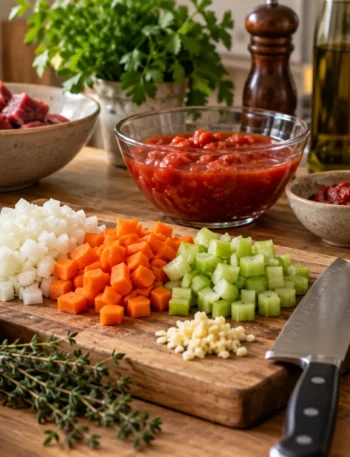
An ingredient list contains verbs. “One onion, finely diced” means the dicing should usually be complete before the method begins. “Butter, divided” means some will be held back. “Juice and zest of one lemon” means the zest must be removed before the fruit is squeezed. These grammatical clues are part of the method, even when they appear above it.
Check quantities against the pans and dishes you own. A crowded roasting tray traps moisture and inhibits browning. A saucepan filled to the brim cannot reduce safely. A loaf tin of the wrong capacity changes depth and therefore cooking time. If the recipe gives no dimensions, compare the volume of the ingredients with familiar equipment before committing to the smallest attractive dish.
This is also the moment for the least glamorous but most effective check of all: confirm that the ingredients are actually present. Open the jar. Smell the spice. Check the date on the yeast. Make sure the “plenty of olive oil” in the bottle is more than a decorative film around the glass. Substitutions are usually better when chosen before cooking than invented under pressure.
Build a short running order
For an ordinary supper, the running order may live in your head. For a more involved dish, write down five or six anchors: oven on, dough mixed, filling cooked, guests arrive, meat rests, serve. Work backwards from the desired serving time and include a margin. Food rarely suffers because it was ready five calm minutes early; it often suffers when every component is asked to finish at precisely the same second.
Separate what must be hot from what can be warm. Many sauces hold well. Roasted vegetables may be excellent warm rather than scorching. A salad can be prepared and dressed at the last moment. Persian Fire Lamb with Jewelled Rice is easier to understand when treated as several overlapping strands: the lamb establishes the long timing, the rice joins later, and the broccoli occupies only the final part of the oven schedule.
The purpose is not to turn dinner into a military campaign. It is to remove decisions from the busiest minutes. A cook who knows the sauce can sit off the heat while the rice finishes is free to taste, adjust and perhaps pour a glass of wine. A cook discovering that fact by accident is merely relieved.
Know where the recipe may be wrong
Every recipe is written for a particular oven, pan, ingredient and pair of hands. Your onion may contain more water. Your hob may be fierce. Your chicken breast may be twice the thickness of the one used during testing. Timings are evidence, not absolution. Use the sensory signs as well: colour, texture, smell, temperature and resistance under a knife.
Reading ahead tells you the purpose of a step. If onions are meant to become soft and sweet, the clock cannot declare them ready while they remain pale and sharp. If a sauce must coat the back of a spoon, its consistency matters more than the promised eight minutes. Understanding the destination makes adaptation possible without losing the dish.
By the end of the second reading, you should be able to describe the broad journey without looking: what begins first, what can wait, what cannot, and how you will recognise that each major stage is complete. Read first, cook second. The meal will not quite look after itself, but it will give you far fewer opportunities to sabotage it.