Four useful materials, four sets of strengths, and fewer disappointing dinners
Every kitchen cupboard holds at least one pan bought with optimism and used with confusion. Some arrive as part of a matching set, as though a shared handle design makes every vessel equally suited to every task. Others are acquired to solve one problem and then pressed into service for everything from scrambled eggs to tomato sauce. The result is often blamed on the cook when the pan was fighting the food from the beginning.
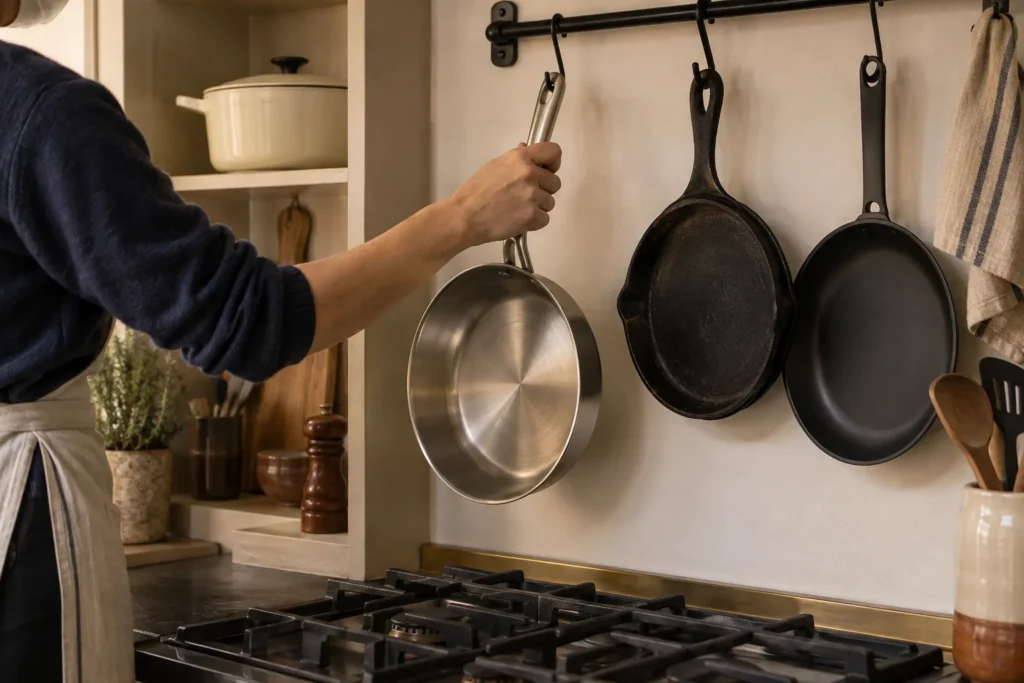
A pan is a collection of trade-offs. Weight, conductivity, heat capacity, surface, shape and maintenance all affect how it cooks. No single material is best at everything. The useful question is not “which pan is best?” but “which weakness can this dish tolerate, and which strength does it need?”
Four types cover most domestic cooking: bare cast iron, stainless steel, coated non-stick and enamelled cast iron. Understanding them is more valuable than owning many versions of each.
Bare cast iron
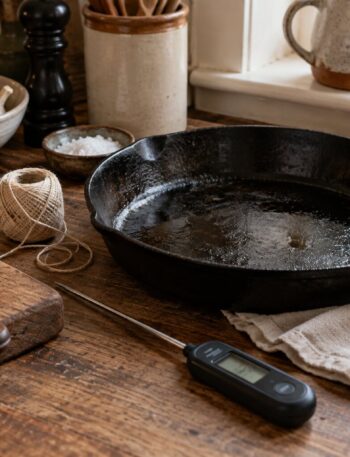
Cast iron is heavy and comparatively slow to respond, but once thoroughly heated it stores a great deal of energy. That makes it useful when cold food would otherwise pull the pan temperature down sharply. Steaks, chops, burgers, roast potatoes and shallow-fried food benefit from the steady heat and generous cooking surface of a well-preheated skillet.
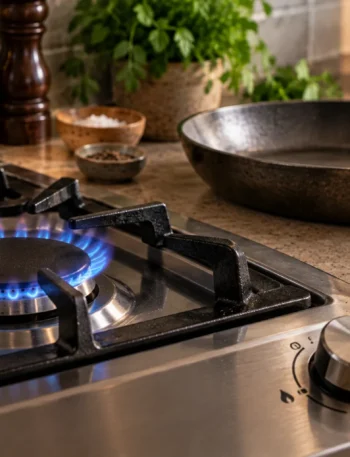
Its reputation for perfectly even heat is overstated. Cast iron can develop hot spots, particularly if heated aggressively over a small burner. Give it time over moderate heat, then move or rotate it if necessary. Stored heat, rather than miraculous conductivity, is its real advantage.
A developed seasoning layer makes the surface easier to cook on, but it is not identical to a modern non-stick coating. Delicate eggs may still cling, especially in a cool or poorly seasoned pan. Acidic ingredients are not forbidden, but long simmering in tomato, wine or vinegar can damage seasoning and may contribute a metallic taste. A quick deglaze is one thing; an afternoon tomato braise is better placed elsewhere.
Dry bare cast iron promptly. If the surface needs oil, apply a very thin film. More oil does not mean more seasoning. A sticky pan is usually wearing too much.
Stainless steel
Stainless steel is the durable all-rounder. It tolerates acidity, high cooking temperatures and vigorous deglazing. It is particularly good when browned residue, or fond, is meant to become part of a sauce. Chateaubriand and Barbecue Lamb Cutlets both illustrate the value of serious browning followed by controlled finishing.
Most good stainless pans contain a conductive aluminium or copper layer because stainless steel alone spreads heat poorly. Construction matters. A heavy, fully clad pan generally behaves more evenly up the sides than a thin pan with a small disc fixed only to its base.
Food sticking is not always failure. For meat, temporary adhesion can be part of browning; once a proper crust develops, the food often releases more readily. Begin with a dry surface on the food, preheat the pan sensibly, add fat when appropriate, and resist moving the ingredient every few seconds. For eggs or very delicate fish, stainless steel asks for more technique and fat than many cooks want to provide.
Coated non-stick
Non-stick earns its place with eggs, pancakes, crêpes and foods whose structure is fragile before it sets. Savoury Crêpes with Mixed Salad is precisely the sort of recipe for which an intact, level non-stick pan removes unnecessary drama. It also permits cooking with a modest amount of fat, although fat may still matter for flavour and browning.
Its limits should be respected. Most coated pans are not intended for fierce searing, prolonged empty preheating or metal utensils. Follow the manufacturer’s temperature and oven guidance, because coatings and handles vary. Use suitable utensils, wash without abrasives, and avoid stacking heavy pans directly on the cooking surface unless a protector sits between them.
A deteriorating coating is not a badge of long service. Replace the pan when the cooking surface is peeling, badly scratched or no longer functioning as intended. One sound non-stick pan reserved for the work that needs it is generally more sensible than treating an entire cookware set as disposable.
Enamelled cast iron
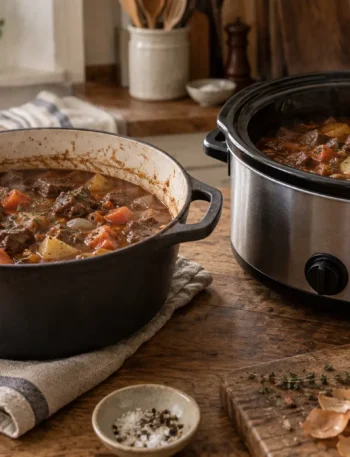
Enamelled cast iron retains heat like bare iron while isolating food from a reactive metal surface. This makes a casserole or Dutch oven useful for slow braises, stews, soups and bread. Minted Lamb Shanks can cook steadily for a long period without an acidic sauce attacking seasoning. Pagnotta can use the enclosed heat of a preheated pot to support oven spring and crust development.
The trade-offs are weight, cost and slow response. Once an enamelled pot becomes too hot, it takes time to calm down. It is a poor choice for a sauce requiring rapid temperature changes. Pale interiors make browning easy to judge, but they may stain. Staining is cosmetic; a chip on the interior cooking surface is more serious and should be assessed according to the manufacturer’s advice.
Avoid thermal shock. Do not take a cold pot straight to fierce heat or pour cold liquid into extremely hot enamel. Lift rather than drag it across glass or ceramic hobs. These pans reward patience more than force.
Shape matters as much as material
A wide sauté pan encourages evaporation and gives food room to brown. A high-sided saucepan limits splashing and suits liquid. A skillet’s sloping sides make turning and tossing easier. A Dutch oven’s depth and lid reduce evaporation during a long cook. Choosing the correct material in the wrong shape can still make the task awkward.
Crowding matters too. The pan needs enough surface area for moisture to escape. When meat or vegetables are packed together, released water lowers the surface temperature and browning slows. Cook in batches rather than buying a hotter hob to solve a geometry problem.
Match the pan to the quantity, not merely the number of diners printed on the recipe. Ingredients vary in size, and recipes sometimes underestimate the space required. A pan should feel occupied, not congested.
A smaller, better cupboard
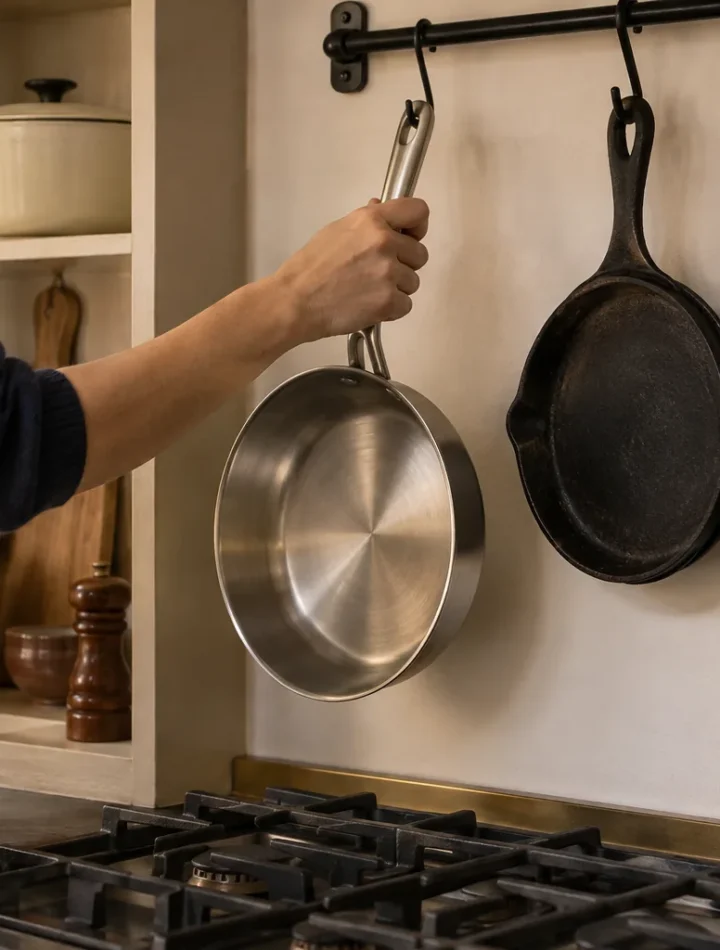
A well-seasoned cast-iron skillet, a good stainless sauté pan, one trusted non-stick frying pan and an enamelled casserole will cover most home cooking. Add saucepans in genuinely useful sizes and a stockpot only if the way you cook requires it. There is little virtue in owning three pans that do the same job badly.
Before buying, lift the pan. Check whether the handle remains comfortable when the vessel is full. Ask whether it works on your hob and can enter your oven. Look at the usable cooking diameter rather than the widest point across the rim. Consider where it will live and whether you will resent its maintenance.
The best pan is not the most expensive or the one with the most impressive guarantee. It is the one whose behaviour you understand. Learn how quickly it heats, where its hot spots sit, how readily it releases food and how long it continues cooking after the heat is lowered. Match the pan to the task, and fewer dinners will need rescuing from equipment that was never suited to them.