Let the Conversation Bring the Passion
Why do so many capable cooks become nervous at the thought of feeding friends? We cook for ourselves and our families without ceremony, yet the moment somebody is called a guest, dinner appears to demand a performance.
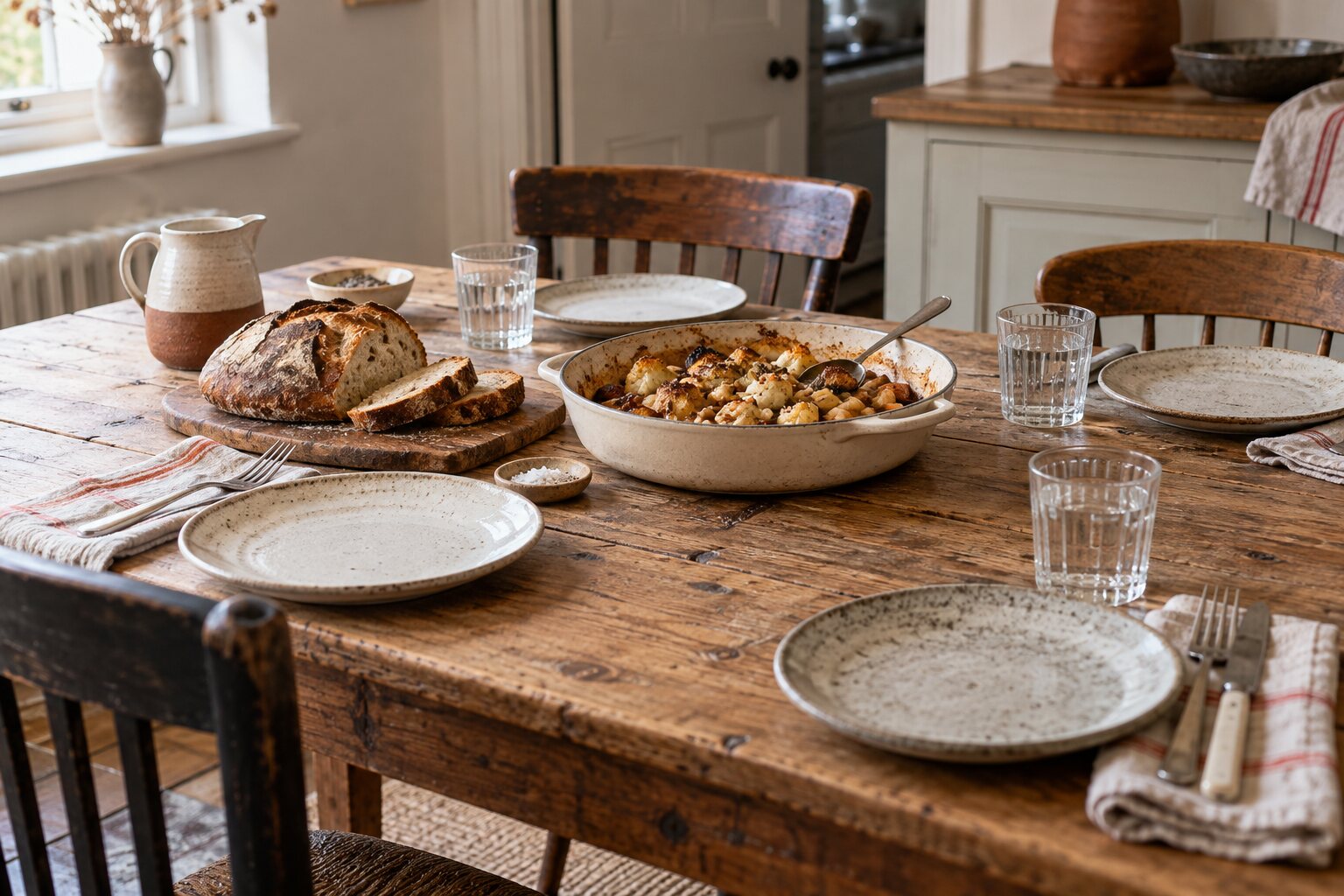
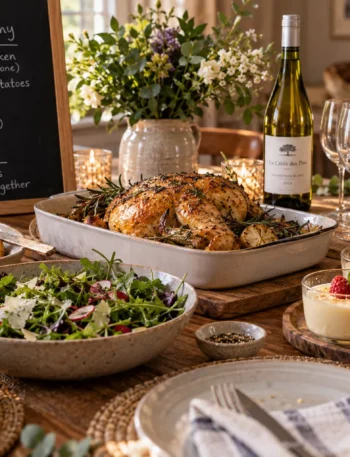
We worry about the food. We worry about timing, matching plates, difficult diets, an unfamiliar recipe and whether the pudding will stand upright. Almost nobody worries about the table, which is the wrong way round.
The food brings people to the table. What happens once they are there is the point.
What Is the Host’s Real Job?
The host’s job is not to display effort. It is to make people feel expected, fed and able to relax.
That begins before the cooking. Ask about allergies and dietary needs clearly enough to receive a useful answer. Do not leave a guest to discover at the table that the apparently suitable dish contains an ingredient they cannot eat. If an allergy is serious, discuss preparation and cross-contact honestly. Confidence should never become guesswork.
Then consider comfort. Is there somewhere for coats? Can everybody sit without negotiating an obstacle course? Is drinking water available without asking? Does the room need more heat, less music or another light? Hospitality often depends upon things that never appear on the menu.
Most of all, be present. Guests take their cue from the host. If you spend the first hour rushing between rooms and apologising, the table learns to feel like a problem. If you sit down, pour something and allow the evening to begin, everybody else can do the same.
How Do You Avoid Being Trapped in the Kitchen?
Choose a menu that respects the occasion and your available time. This is not the evening to attempt four unfamiliar techniques merely because the photographs looked impressive.
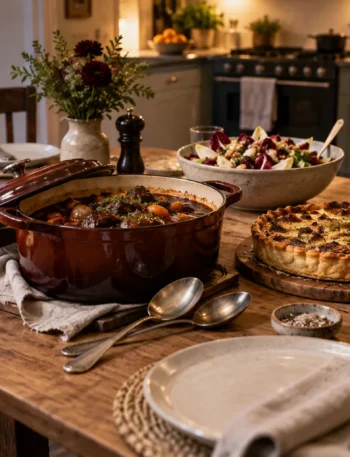
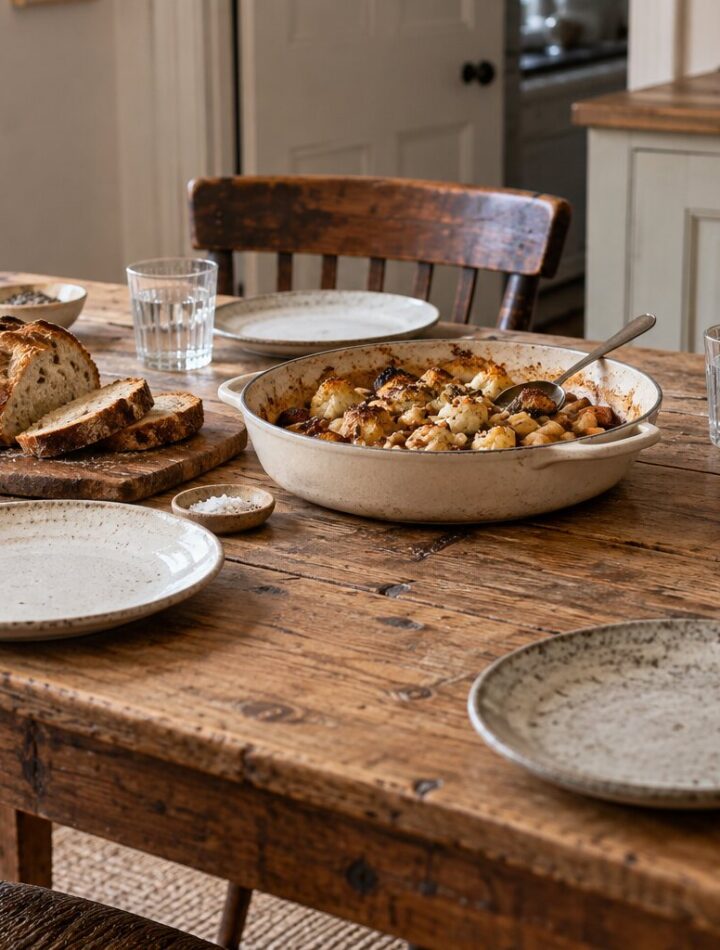
Build the meal around one principal dish that can be prepared largely in advance or that improves with a little waiting. A braise, curry, tagine, pie or substantial baked dish allows the oven or hob to shoulder the work. A cold starter can be assembled before the doorbell. A pudding that needs only serving is more sociable than one demanding frantic attention at the last moment.
Work backwards from the time you hope to eat. Include resting, reheating, carving and the delays introduced by conversation. Set the table early. Empty the dishwasher before guests arrive. Clear enough space in the refrigerator for anything that must return there. These small acts protect the final half-hour.
The aim is not military precision. It is to arrange the evening so that a delay of fifteen minutes does not damage either the food or your mood.
Let One Thing Be the Hero
Every course does not need to compete for attention. Choose the element you care about most and simplify around it.
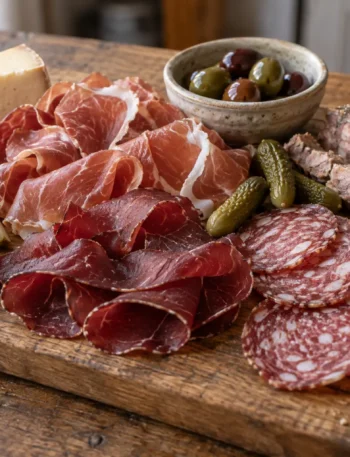
If the slow-cooked lamb is the hero, serve it with a crisp salad, good bread and something sharp. If the charcuterie board is the event, add pickles, fruit and a modest cheese rather than turning it into the introduction to an enormous dinner. If dessert is a celebration cake, the main course can be generous but uncomplicated.
This is the same discipline that makes a good plate. Contrast matters, but clutter does not.
Colour, Texture and Flavour
Variety is useful when it creates balance. Think in terms of colour, texture and flavour rather than the number of dishes.
A rich, soft braise welcomes something crisp and acidic. Pale food may need green herbs or a bright vegetable, not as decoration but as relief. A smooth soup benefits from toasted seeds, croutons or a spoonful of something cool. A salty board wants fruit, pickles or fresh vegetables nearby.
The principles of charcuterie scale well to a larger table. Bread is dependable, pickles cut through fat, and items arranged at different heights and in loose groups appear abundant without requiring excessive quantity. Put food where people can reach it. Provide a separate utensil for each dish, especially where dietary requirements are involved.
Do not confuse variety with obligation. Three things that belong together will always be preferable to nine things that merely fit on the table.
Boards, Buffets and Food Safety
Food served informally still requires care. Keep chilled ingredients refrigerated until they are needed and avoid leaving perishable food at room temperature for longer than current food-safety guidance permits. Serve smaller quantities and replenish them from the fridge rather than setting out everything at once.
Keep hot food properly hot until serving. Use clean utensils, replace any dropped spoon and do not return food from a guest’s plate to a communal dish. If the evening is long, clear vulnerable leftovers promptly rather than allowing good conversation to turn them into a doubtful breakfast.
None of this needs to look clinical. Safe habits can be quiet habits.
What Should People Drink?
Serve what suits the food, the guests and the evening. Wine may be welcome, but it is not compulsory and it should never be the only interesting choice. Chilled water, sparkling water, ginger ale, a well-made cordial or an alcohol-free cocktail deserves the same glassware and consideration as anything else.
Offer drinks rather than requiring explanations. A guest should be able to choose not to drink alcohol without becoming the subject of the next conversation.
The Evenings People Remember
Some of the best evenings I can recall involved modest food and immodest quantities of conversation. A dish stayed on the table, bread was torn rather than arranged, and nobody noticed that the planned second vegetable had never appeared.
Ambition can be enjoyable, and there is pleasure in making something elaborate for people you care about. The mistake is believing that difficulty is evidence of generosity. A host exhausted by a menu has spent something the guests never asked to receive.
Cook enough. Season it well. Make the room comfortable. Then let the food stop being the subject when the conversation finds somewhere better to go.
Invite the People
There will always be a reason to postpone: the room is not finished, the chairs do not match, the week has been busy or you have not found the perfect menu. Perfection is remarkably effective at keeping a table empty.
Choose something dependable from Larder & Ladle. Add one dish you can make ahead, something fresh, good bread and a pudding if the occasion asks for it. Invite the people before you can invent another reason not to.
The recipes are how you arrive. The table is the point.