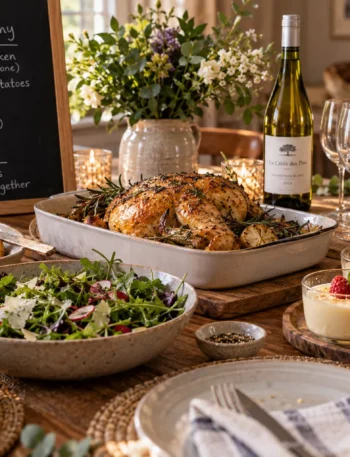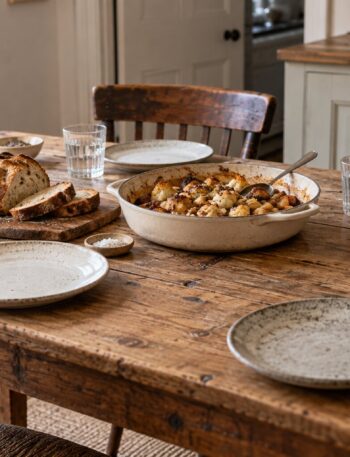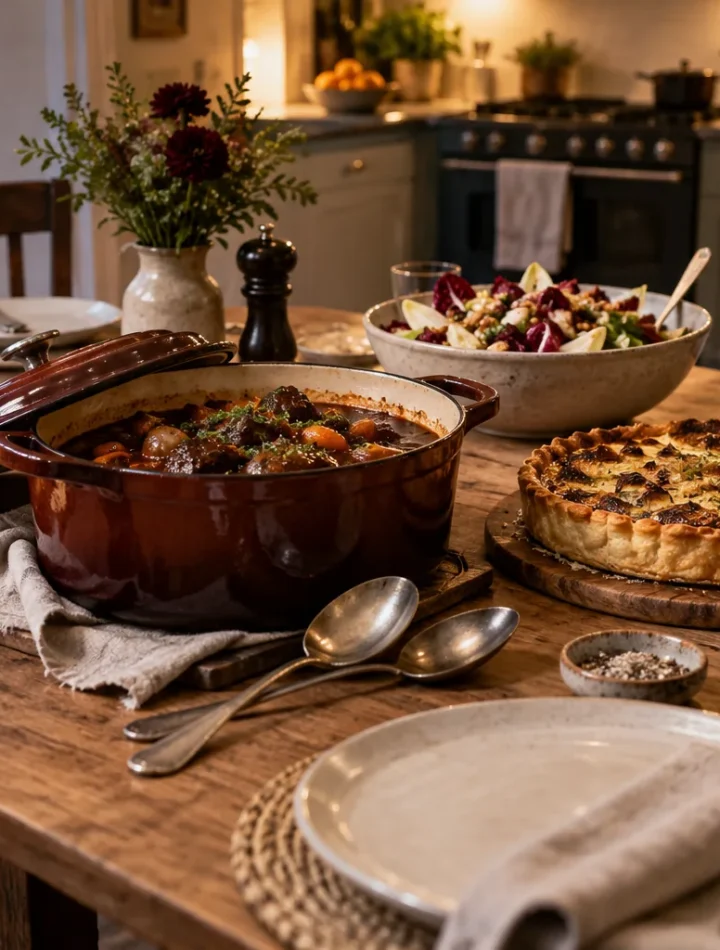
A generous menu leaves room for the host
The saddest sight at a dinner party is the host who is not at it: a person glimpsed only in transit between kitchen and table, apologising while a third dish demands precisely timed assembly and the conversation they meant to join continues without them. Good hosts are not necessarily the most technically ambitious cooks. They are the cooks who understand that hospitality includes their own presence.
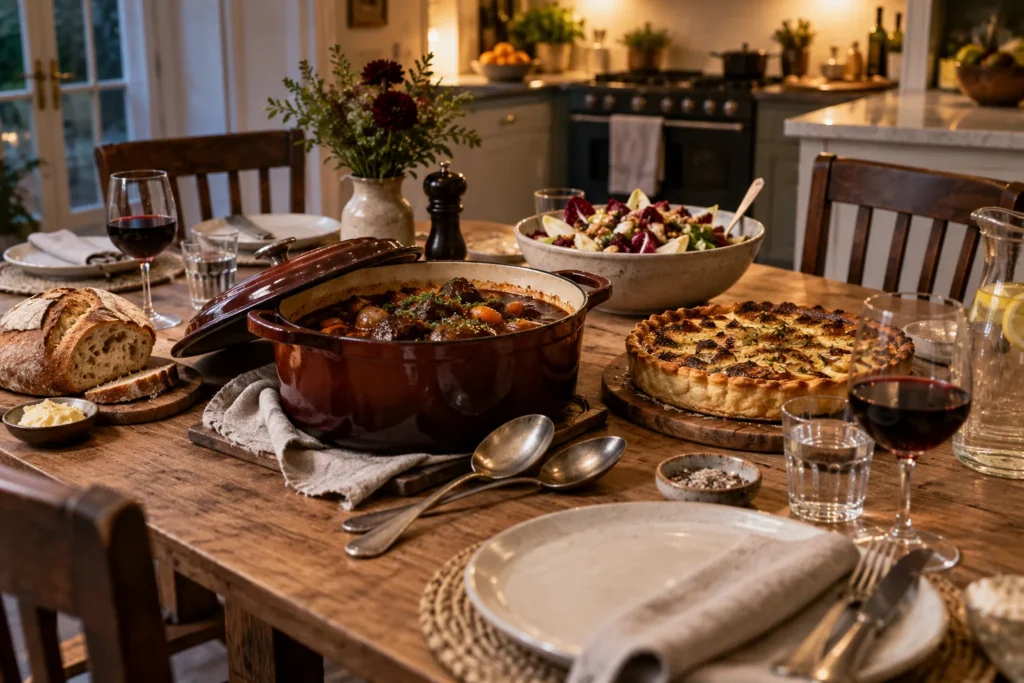
Cooking for the table means designing the meal around the experience of eating it, not around a collection of impressive recipes. The menu must fit the kitchen, the number of hands available, the confidence of the cook and the kind of evening intended. A beautiful dish that requires twenty silent minutes of concentration after everyone sits down may be perfect for another night.
This is not lowering standards. It is placing the standard in the right place. Warmth, abundance, pacing and composure matter. The food should support those qualities rather than consume them.
Count the final jobs, not the courses
Menus are often planned as nouns: starter, main, side, dessert. Plan instead in verbs. Carve, whisk, fry, drain, dress, garnish, warm, plate. Then count how many of those verbs must happen in the final fifteen minutes. If several require both hands, the same burner or uninterrupted attention, the menu is overdrawn.
Write a finish list and remove work from it. Choose one element that needs true last-minute cooking and surround it with food that can hold. A steak may deserve immediate attention, so the sauce, vegetables and starter should not demand it too. A room-temperature tart is a kinder companion to a roast than a soufflé. A salad can wait undressed; a deep-fried garnish cannot.
The useful test is blunt: where will you be when the guests pour their first drink? If the answer is “measuring six ingredients for a sauce”, that work belongs earlier or that sauce belongs on another menu.
Choose dishes that forgive
Braises, curries, stews, pâtés, chutneys and many baked dishes are natural hosts’ food because they tolerate time. Some improve after a night in the refrigerator as flavours settle. Others reheat gently without loss. Murgh Makhani and Minted Lamb Shanks allow the main work to happen before the doorbell rings. Country Liver Pâté requires advance preparation and arrives at the table with no last-minute theatre.
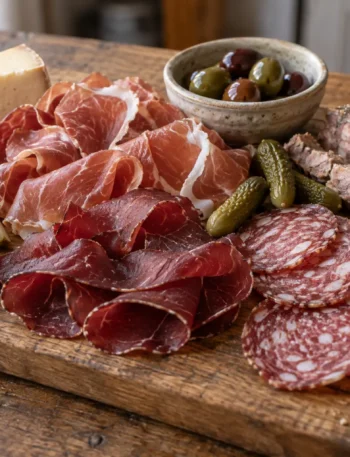
Room-temperature food is another quiet ally. A charcuterie board, savoury tart, marinated vegetables or good bread can be arranged before the room fills. Not every course needs to arrive steaming.
Avoid a menu built entirely from dishes sharing one vulnerability. Three fried courses create a queue at the hob. Several oven dishes at different temperatures turn the thermostat into an argument. A meal of delicate individual portions multiplies plating. Variety in cooking method is not only culinary; it is logistical.
Plan backwards from sitting down
Choose the time you want everyone at the table and work backwards. Include resting time for meat, reheating time for cooked dishes and a margin for conversation at the door. Guests do not arrive with the precision of laboratory instruments. A menu that collapses when somebody is twelve minutes late is not hospitable to either side.
Prepare a one-page running order for larger meals. It need not record every chopped herb. Mark the moments that matter: dessert out of the refrigerator, oven temperature changed, main dish reheated, salad dressed, bread warmed. Put serving dishes and utensils out in advance. There is little dignity in discovering, with hot food in both hands, that the appropriate platter lives behind the Christmas cake tin.
Build in holding places. A low oven may keep suitable food warm, but can also dry it. A lidded casserole retains heat. Meat needs a warm resting place that does not continue cooking it aggressively. Sauces may hold in a small pan or heatproof jug. Decide these locations before every surface becomes occupied.
Let the table do some work
Serving everything individually creates precision and labour. Bringing generous dishes to the table invites people to participate and lets appetite determine portion. A bowl of Persian Fire Lamb with Jewelled Rice already contains colour, texture and abundance; it does not need to be rebuilt four times with tweezers. Passing dishes creates movement and conversation.
Set the table early enough that it no longer competes with cooking. Water, glasses, serving spoons, trivets and napkins are part of the meal’s equipment. Put sauces and condiments in vessels that can remain at the table. If a garnish is optional, let it be optional rather than making it the final obstacle between food and hungry people.
Drinks deserve their own plan. Chill what needs chilling. Open bottles that benefit from air. Prepare garnishes before the first glass is requested. A jugged drink or a simple choice of wine and water may suit the evening better than becoming an unwilling cocktail bartender while dinner waits.
Design for the people who are coming
Ask about allergies and dietary requirements before planning, not at the table. Make sure every guest can eat more than a collection of side dishes. If one menu can accommodate everyone without drawing attention to difference, so much the better. Where separate food is necessary, give it the same thought and generosity as the main dish.
Consider appetite and familiarity. A challenging ingredient can be enjoyable, but an entire menu of challenges makes the guest work for dinner. Include something recognisable, something fresh and enough food that nobody performs the arithmetic of politeness. Abundance need not mean five courses. One excellent main dish, a sharp salad, bread and a dessert prepared yesterday can feel more generous than a procession of anxious small plates.
Noise, lighting, seating and temperature affect the meal as surely as seasoning. The best food in a room where nobody can hear or where half the table sits in a draught will not rescue the evening. Hospitality is the whole environment in which the food is eaten.
Leave something deliberately imperfect
A host who attempts to conceal every sign of work often becomes trapped by it. Let the bread board show crumbs. Let guests see the casserole. Accept that the final spoonful may not land in precisely the same place on every plate. Ease is not the absence of care; it is care directed towards what people actually experience.
When the doorbell rings, stop undertaking improvements nobody requested. Wipe the worktop, check the oven, put down the knife and welcome the person at the door. The final five per cent of garnish rarely matters as much as the first five minutes of arrival.
Nobody remembers whether every plate left the kitchen at the same second. They remember whether the food was good, whether there was enough and whether the evening felt warm. Design the menu so that most of the cooking is complete before the company begins. Pour the drinks, bring the dishes to the table and sit down. That is not abandoning the meal. It is finishing it.