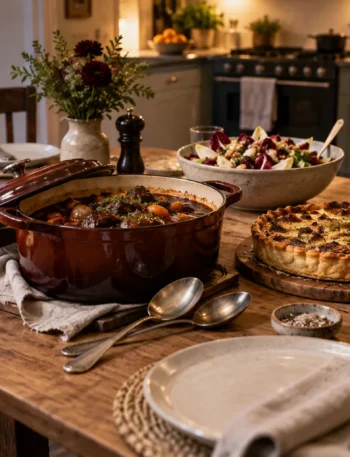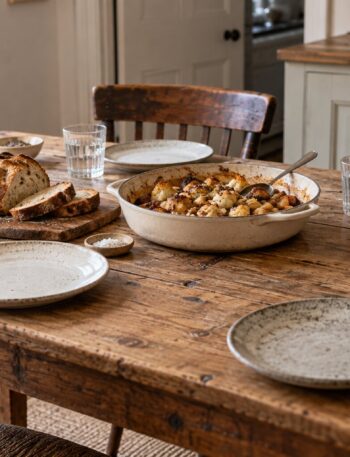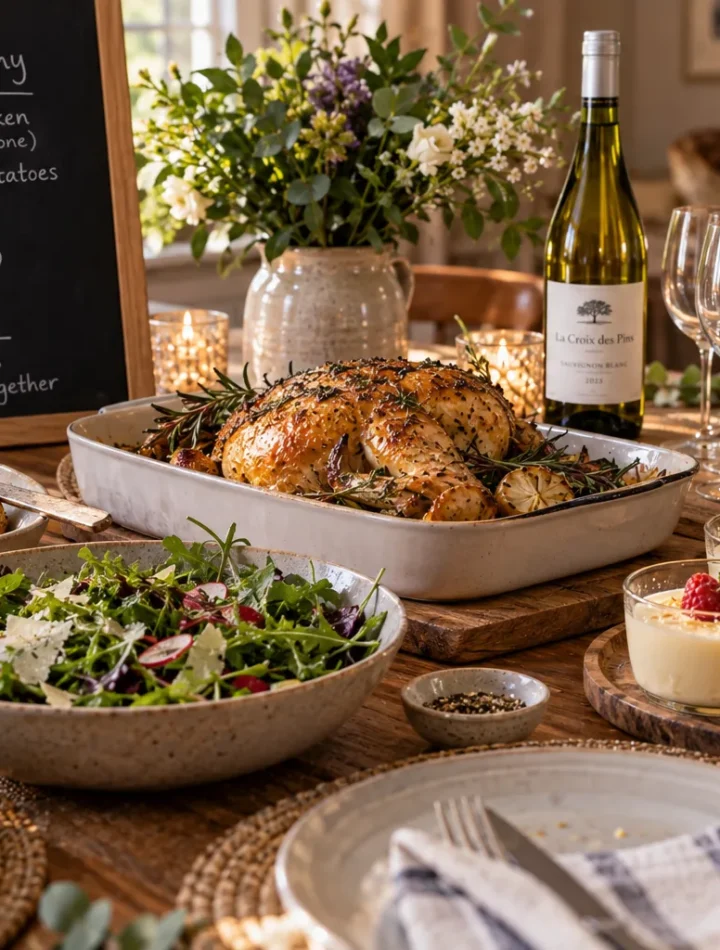
Cooking for the table rather than the clock changes the atmosphere of a meal. The natural next step is designing a menu that allows you to do it.
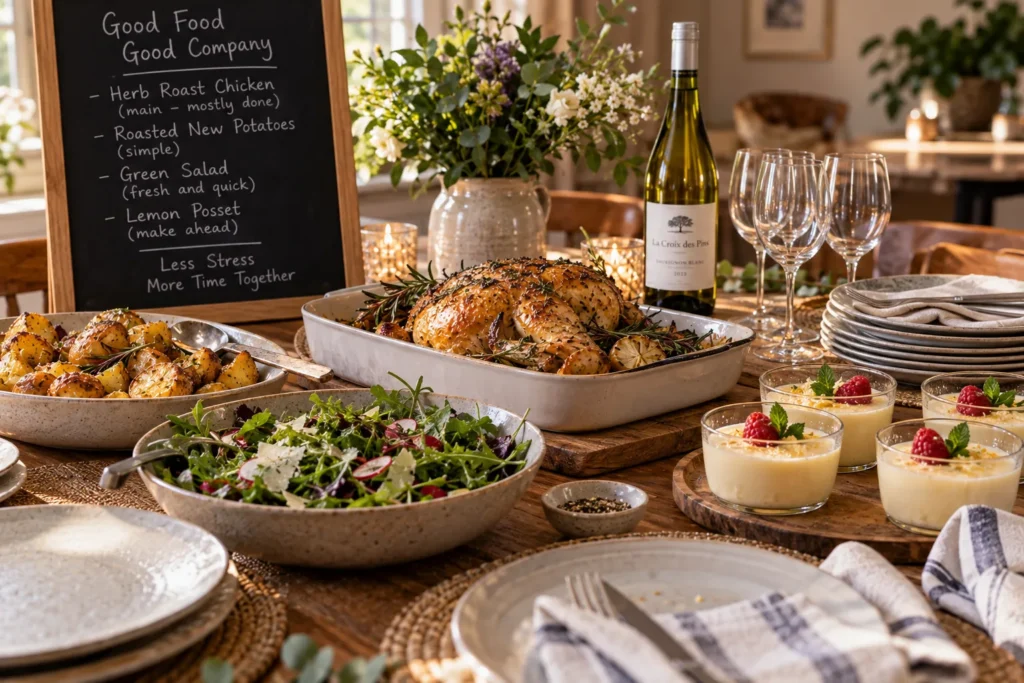
A good menu is not simply a collection of dishes you like. When people are coming for dinner, those dishes must also coexist in one kitchen, on one cooker and with one cook.
Three individually easy recipes can combine into a thoroughly difficult evening if all three demand the oven at different temperatures and all require your attention during the final ten minutes.
The menu itself should help you.
Do not make every dish perform
A dinner does not improve because every plate contains a technical achievement.
If the main course requires concentration, let the starter be simple. If dessert must be assembled at the last moment, choose a main course that can rest or wait.
Contrast is more enjoyable than relentless complexity anyway.
A slowly cooked dish followed by a fresh, simple pudding can feel more generous than three courses competing to prove how much work went into them.
Look for the final ten minutes
When planning, ignore the total cooking time for a moment and examine the end.
What happens immediately before serving?
If one dish needs frying, another needs whisking, the vegetables need draining and six plates need warming, you have designed a traffic jam.
Move work earlier where possible. Choose a sauce that can be made ahead. Serve a vegetable that is happy at room temperature. Pick a pudding that waits in the refrigerator rather than one that demands six perfectly timed individual soufflés.
Use the oven intelligently
Oven space is a resource.
Two dishes that cook happily at roughly the same temperature are natural companions. One that needs fierce heat while another requires a gentle bake may not be.
Remember that food can often rest. Meat may benefit from it. Some baked dishes tolerate a short wait. Bread can be warmed after the main cooking is finished.
The oven timetable should be part of the menu, not an unpleasant surprise discovered halfway through it.
Give yourself something to serve immediately
Guests rarely arrive at precisely the same moment.
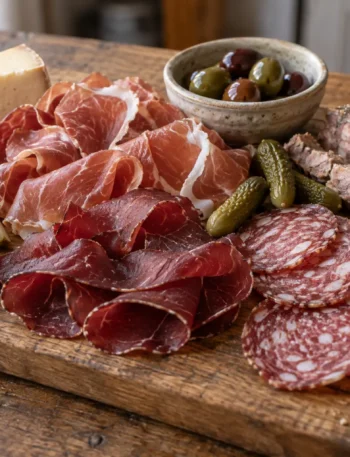
Having one thing ready without further cooking removes much of the pressure. It might be olives, good bread, a dip or something small prepared earlier.
Its purpose is not to create another course. It gives people something to share while coats are removed, drinks are poured and the last few minutes in the kitchen take however long they actually take.
Sit down
This is the part most easily forgotten.
If everybody else spends the evening eating while you spend it cooking, the menu has failed one of its principal jobs.
There will always be moments when the cook needs to disappear. That is part of entertaining. But the meal should contain stretches in which nothing urgent is happening and you can occupy your own chair.
Plan those stretches deliberately.
The most memorable dinner is rarely the one with the greatest number of components. It is the one where the food arrives in good condition, nobody is hurried and the person who cooked it is actually there to enjoy it.
That is a menu doing its share of the work.