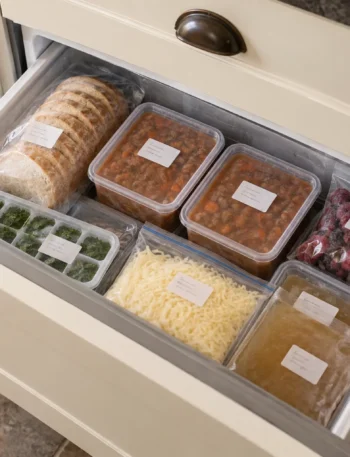
The freezer gives food a second timetable. The next useful habit is to stop thinking of leftovers solely as tomorrow’s smaller version of tonight’s dinner.
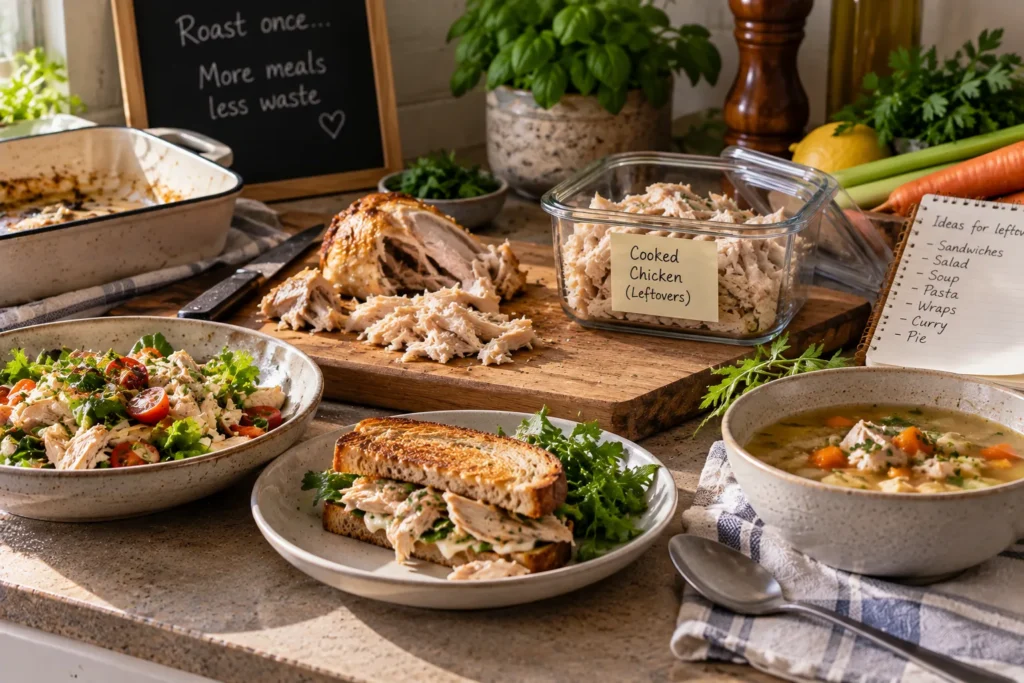
A leftover is often more useful when treated as an ingredient.
Roast vegetables can become soup. Cooked potatoes can become a hash. Rice can form the beginning of another dish, provided it has been cooled and stored safely. Stale bread can become crumbs, croutons or something deliberately soaked rather than reluctantly toasted.
The objective is not disguising old food. It is recognising what work has already been done.
Ask what the ingredient has become
Cooking changes an ingredient.
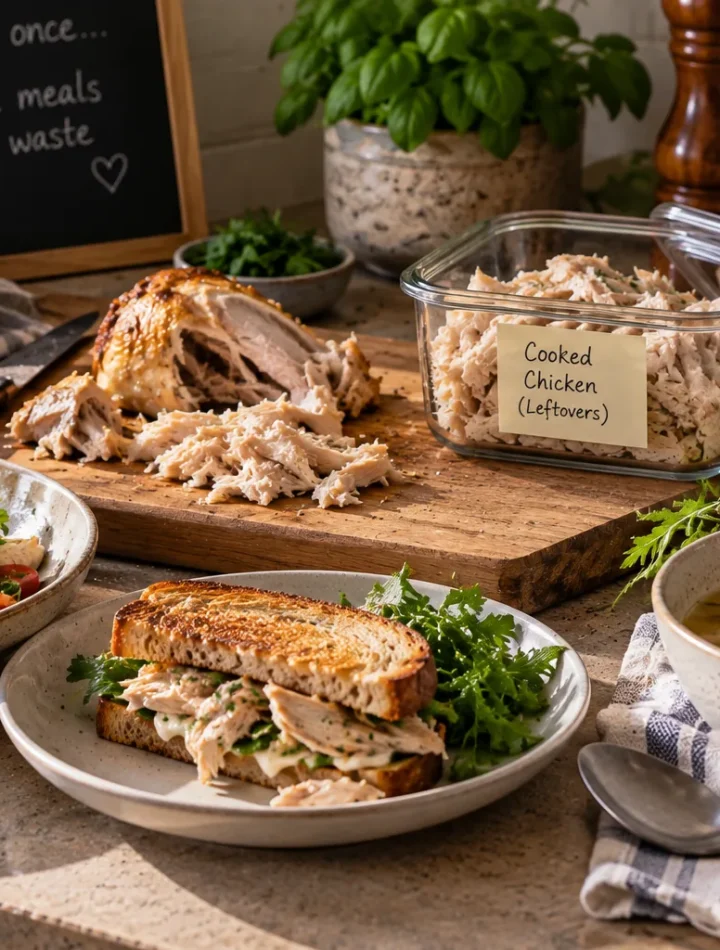
Yesterday’s roast chicken is no longer raw chicken requiring an hour in the oven. Its flavour has developed and its structure is already cooked. What it needs now may be only enough heat to warm it safely in a sauce, soup or pie filling.
Cooked vegetables may already be soft enough to purée. Roasted squash can disappear into a soup in minutes. Caramelised onions can transform a quick tart or sandwich.
Look at the leftover for what it is now, not what it was before dinner.
Store with the next meal in mind
A large anonymous container in the refrigerator is easy to ignore.
Divide food sensibly, label it when necessary and keep components separate when that preserves their usefulness. A dressed salad deteriorates rapidly; its undressed leaves, cooked grains and dressing may have survived much better in separate containers.
Prompt cooling and appropriate refrigeration matter too. Food safety is not improved by leaving dinner on the worktop while deciding whether anybody wants seconds.
Build a flexible meal around it
Some dishes are naturally good destinations for small quantities.
Soups, omelettes, frittatas, pasta, fried rice, filled flatbreads and savoury pies can absorb modest leftovers without making them feel like an obligation.
That does not mean emptying the refrigerator indiscriminately into one pan.
Choose ingredients that make sense together and add whatever the leftover lacks: freshness, acidity, crunch, sauce or spice.
Know when not to save something
Reducing waste does not mean treating every scrap as precious.
Food that has been stored unsafely, shows signs of spoilage or whose history you genuinely cannot establish is not made virtuous by eating it.
The goal is to prevent avoidable waste through planning, storage and imagination, not to take unnecessary risks at the end of the process.
Cook once, gain twice
There is also a difference between leftovers and deliberate extra cooking.
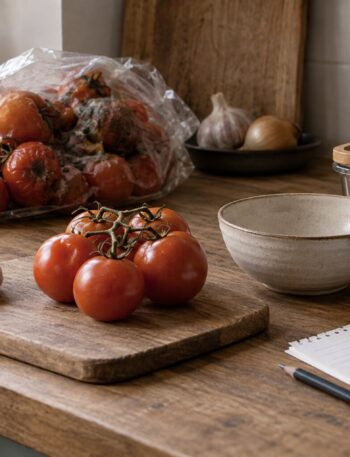
Roasting an additional tray of vegetables because you know tomorrow’s lunch needs them is planning. Making enough tomato sauce for two meals and freezing half is planning. Cooking a few extra potatoes because they will become another dish is planning.
Once you begin seeing cooked food as future ingredients, the refrigerator changes character.
It stops being the place where yesterday’s dinner waits to be dealt with and becomes what its name suggests: part of the larder.