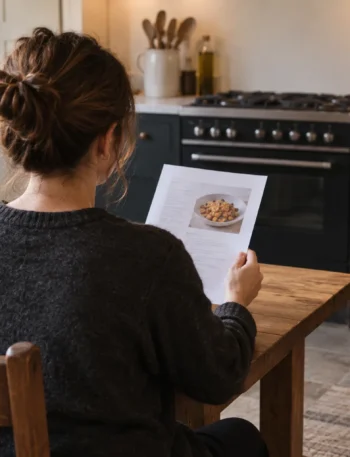
Reading the recipe before lighting the hob gives you the map. The next step is arranging the journey.
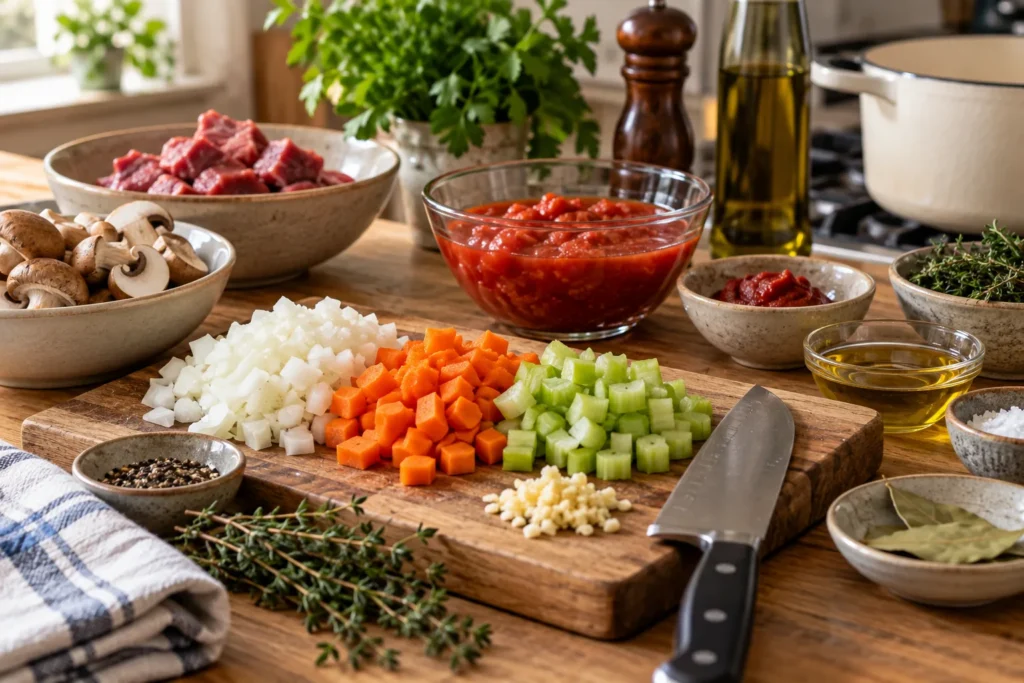
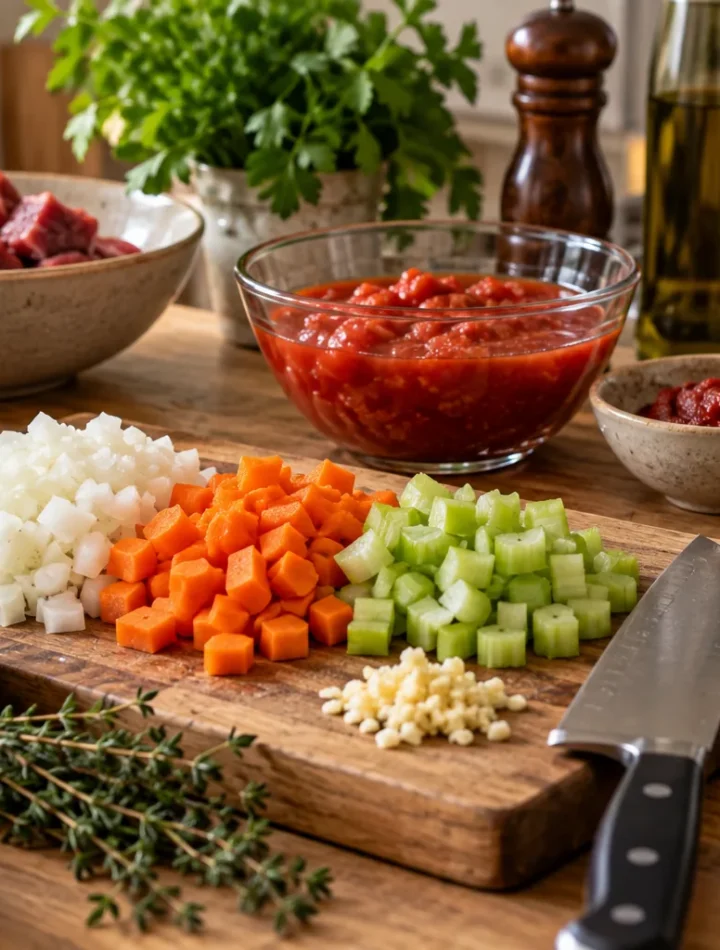
“Mise en place” can sound rather grand for something that is, at heart, extremely practical: have what you need ready before the moment you need it. That does not mean lining twenty tiny glass bowls across the worktop like a television cook. It means looking at the recipe you have just read and deciding which jobs can safely wait and which cannot.
If an onion cooks for ten minutes before anything else happens, there is little point measuring the parsley garnish before you begin. If the next three ingredients are added within thirty seconds of one another, having them ready is the difference between controlled cooking and frantic cupboard-opening.
Prepare for the fast parts
The best place to begin is with the pressure points.
Anything involving very hot oil, rapidly changing sugar, eggs setting in a pan or spices toasting over heat deserves your full attention. Once those stages begin, stopping to peel garlic or search for vinegar is rarely a good idea.
Prepare those ingredients first. Measure them, chop them and put them somewhere sensible. The purpose is not neatness. It is to remove unnecessary decisions at precisely the point when the food needs you.
Do not prepare everything too early
There is an opposite mistake: treating preparation as though every ingredient must be chopped before cooking begins.
Some foods deteriorate once cut. Herbs wilt. Apples brown. Potatoes discolour. Freshly grated ingredients can dry out. Other preparation simply occupies space for no useful reason.
Good organisation is therefore selective. Ask not “Can I prepare this now?” but “Will preparing this now make the cooking easier without making the ingredient worse?”
Give waste somewhere to go
One of the simplest improvements to a busy worktop is a bowl for peelings, trimmings and packaging.
Without one, scraps spread until useful space disappears beneath onion skins and carrot tops. With one, the board remains usable and clearing between stages takes seconds.
Keep anything genuinely useful separate. Parmesan rinds, clean vegetable trimmings or herb stalks may have another purpose. Organisation and reducing waste often begin in exactly the same place.
Put tools where the work happens
The same principle applies to equipment.
A spoon for a sauce belongs beside the sauce. Oven gloves belong near the oven. The colander required for pasta should not still be underneath six mixing bowls when the pasta is ready.
This sounds painfully obvious until the first time a pan needs draining immediately and the sink contains the chopping board, the colander is in a cupboard and there is nowhere safe to put the hot saucepan.
Clear as you go, but cook first
Cleaning as you cook is useful only when it does not interfere with cooking.
Use quiet periods. Wash the knife while something simmers. Wipe the board while the oven does the work. Put ingredients away once their part is finished.
But if a sauce needs stirring, stir the sauce. Nobody receives a prize because the kitchen was immaculate at the exact moment dinner burned.
Mise en place is not about making a kitchen look professional. It is about making cooking feel less hurried. Read first, identify the moments that matter, prepare for those moments and leave yourself enough space to think.
That is organisation worth having.