Knowledge becomes useful when it is put into practice.
Where Do You Actually Begin?
So, you have decided to learn to cook. Before you begin, however, you must resist one of the greatest temptations known to the new cook: shopping.
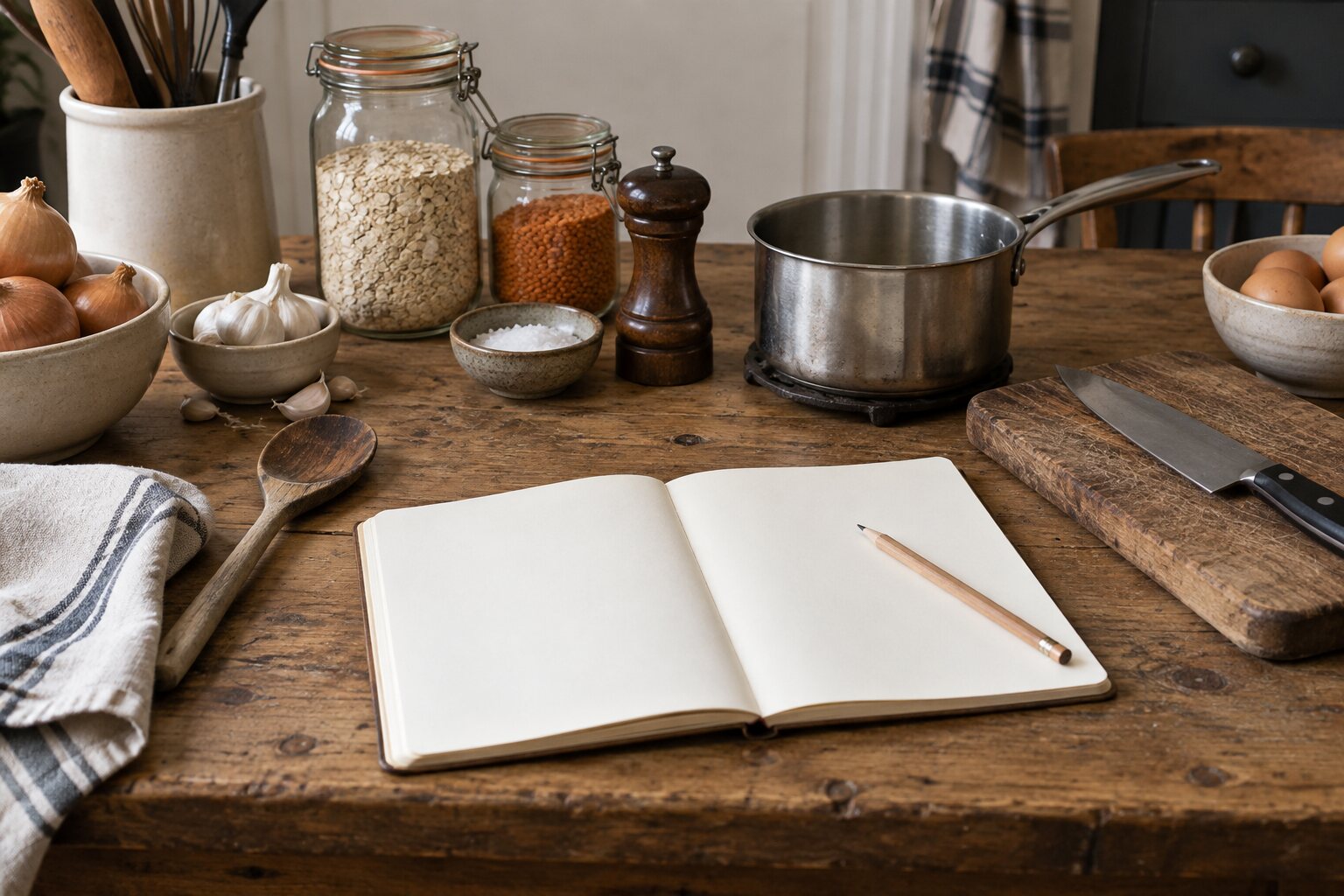
I do not mean shopping for food. I mean that first determined expedition for equipment, when every polished pan and ingenious little gadget appears to promise competence in exchange for money. The shops are full of such promises. There are tools for slicing an avocado, spiralling a courgette, separating an egg and stripping the leaves from a sprig of thyme. Most perform their single duty perfectly well. Almost none is necessary when you are starting out.
That is good news. A kitchen should grow around the way you cook, not around the way a catalogue suggests you might cook one day.
What Do I Actually Need?
My early kitchen would not have impressed anybody. It contained one decent knife, one heavy pan, one chopping board, one tin opener and one wooden spoon. Add a heat source, a plate, a bowl and something from which to drink, and you have the beginnings of a working kitchen.
The word decent matters more than the word expensive. A knife must be comfortable in your hand, capable of taking an edge and appropriate for the work. A board must be large enough to use safely and stable enough not to skate across the worktop. A pan should sit flat, heat evenly and possess a handle you can trust. None requires a famous name stamped upon it.
If your chopping board moves, place a damp cloth beneath it. Keep your knife sharp because a blunt blade encourages force, slipping and frustration. Use separate boards, or wash thoroughly between tasks, when moving from raw meat or fish to foods that will be eaten without further cooking. These are modest habits, but modest habits are what make a kitchen work.
Let the Kitchen Earn Its Contents
I have moved house more times than I care to count. Repeated relocation produces a ruthless audit of possessions. Anything that is awkward, fragile, seldom used or easily replaced must argue for its place in the box. The dependable pieces travel every time.
That is why I would not tell a new cook to buy a complete set of anything. Sets are designed to look complete on a shelf, but your cooking may never require half of what they contain. Begin with the essentials. When you encounter the same limitation three or four times, you have discovered a genuine need rather than a passing desire.
Perhaps you bake often and a digital scale becomes indispensable. Perhaps you cook rice several times a week and decide that a rice cooker earns its worktop space. Perhaps you make soup for a family and a stick blender saves both time and washing-up. Buy the tool when the work has made its case.
There is no virtue in refusing useful equipment. The point is to distinguish equipment that removes needless labour from equipment that merely relocates it to a difficult-to-clean drawer.
What About the Recipes?
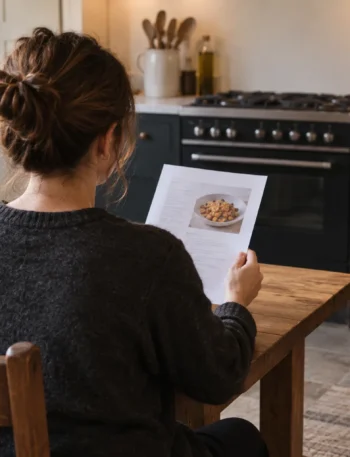
You will notice that I have said very little about recipes, and that is deliberate. Recipes matter, but method matters more. A recipe can tell you to heat a pan; experience tells you what the pan sounds and smells like when it is ready. A recipe can instruct you to brown meat; experience teaches you the difference between browning and steaming. A recipe may provide an oven temperature, but only repeated use will reveal whether your own oven runs hot, cold or differently from one shelf to the next.
Learn to observe. An onion softening gently makes a quiet sound and becomes translucent before it colours. A pan crowded with mushrooms releases water and cools rapidly. A sauce thickens first at the edges. Bread may look finished before its centre is ready. These details are not secret knowledge. They are simply the evidence cooking places in front of you.
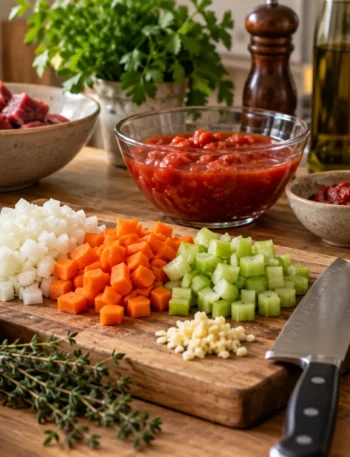
The best early recipes are forgiving enough to let you notice that evidence. Make a vegetable soup, scrambled eggs, a tomato sauce, a tray of roasted vegetables or a simple stew. Cook the same dish again rather than racing immediately towards novelty. The second attempt is where memory begins to form, and the third is where you start making decisions of your own.
Build a Larder, Not a Museum
The same discipline applies to ingredients. A cupboard crowded with specialist sauces and ageing packets is not a well-stocked larder. It is merely a record of former enthusiasm.
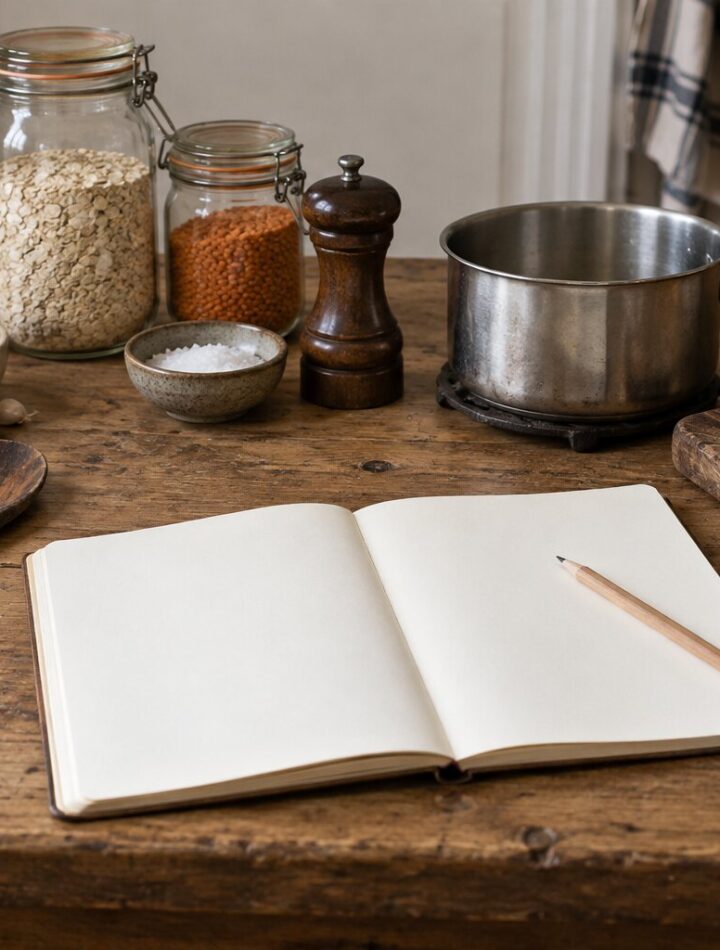
Begin with what you genuinely use: salt, pepper, a cooking oil, a vinegar, rice or pasta, flour if you bake, tinned tomatoes, beans or pulses, and a small number of herbs and spices suited to the food you enjoy. Buy modest quantities. Replace what you finish. Add something new when a recipe gives it a clear purpose.
Date opened packets if you are likely to forget them. Store dry goods in sealed containers where moisture and pests cannot get at them. Arrange the cupboard so the oldest item is visible rather than buried behind its replacement. None of this is glamorous, but neither is discovering three open bags of the same lentils.
Attention Is the Best Equipment
Money does not provide good food on its own, and neither does equipment. Both can help, certainly, but attention remains the more valuable ingredient. Taste before seasoning and again afterwards. Read the whole recipe before switching on the heat. Prepare what you need before the moment you need it. Notice what changes and write down anything worth remembering.
Do not mistake a modest kitchen for a limitation. Some of the finest food I have eaten came from rooms with little space, ordinary pans and cooks who knew precisely what those pans could do.
Choose one simple dish. Read it through, clear the worktop and begin. When a missing tool genuinely prevents you from cooking, you will know what to buy and why. Until then, keep your money for the ingredients.