Acidity can wake up a dish that tastes heavy or flat. Salt performs an equally important job, but its effect is often misunderstood.
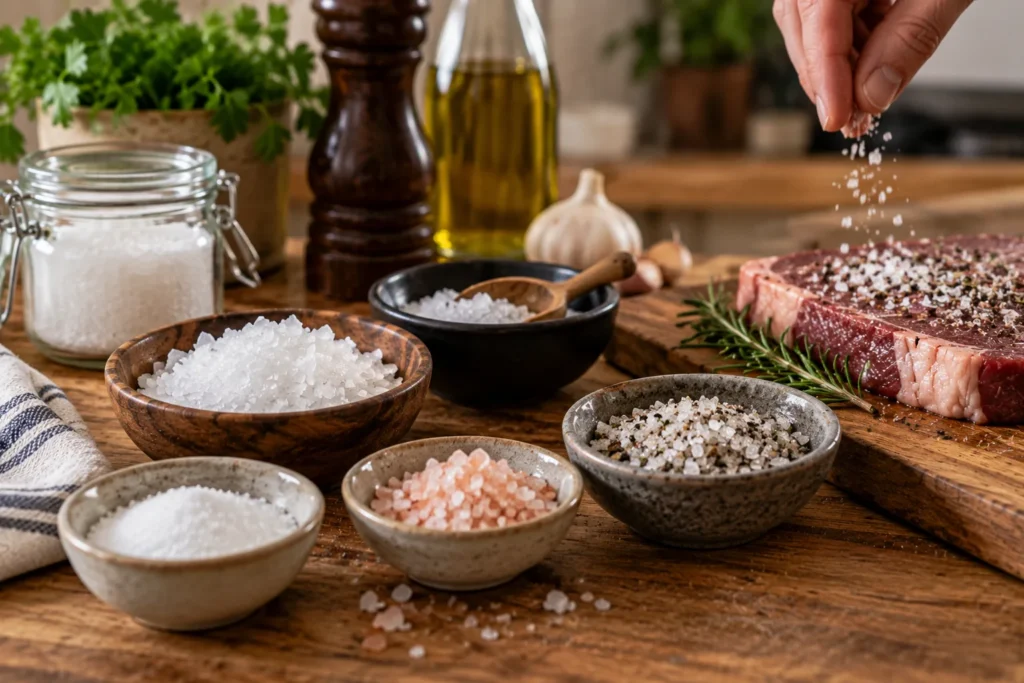
Salt certainly makes food salty if enough is added. Long before that point, however, it changes the way other flavours are perceived. Used carefully, it can make tomatoes taste more like tomatoes, bring sweetness forward and reduce the impression of bitterness.
That is why “add salt at the end” is not a universal rule. When salt is added can matter almost as much as how much is added.
Seasoning is a process
A pot of soup seasoned only at the table is not necessarily equivalent to one seasoned carefully during cooking.
Ingredients release water. Sauces reduce. Pasta absorbs seasoned cooking water. Salt placed on vegetables before roasting behaves differently from salt scattered over them after they leave the oven.
This is why good seasoning is usually incremental.
Add some when appropriate, cook, taste and reassess.
The important word is taste.
Reduction concentrates salt too
A sauce that tastes perfectly seasoned before a long reduction may become aggressively salty afterwards.
If a liquid is going to reduce substantially, be cautious early on. You can add more salt later. Removing it is considerably harder.
The same warning applies when salty ingredients are already present. Bacon, anchovies, olives, capers, hard cheeses, cured meats, stock products and soy sauce all contribute seasoning of their own.
Treat them as part of the equation rather than adding salt automatically because the recipe has reached the line that says “season”.
Salt can change texture
Salt does more than alter flavour.
Applied to sliced vegetables, it can draw water from their tissues. In bread dough it influences gluten behaviour and fermentation. In meat, timing and concentration can affect moisture retention and texture. In pickling and curing, salt may be performing a preservation or safety function rather than merely seasoning the food.
Those uses are not interchangeable.
A curing quantity specified by weight is not an invitation to season by instinct. Conversely, a pinch of salt added to a pan of onions does not require laboratory precision.
Context matters.
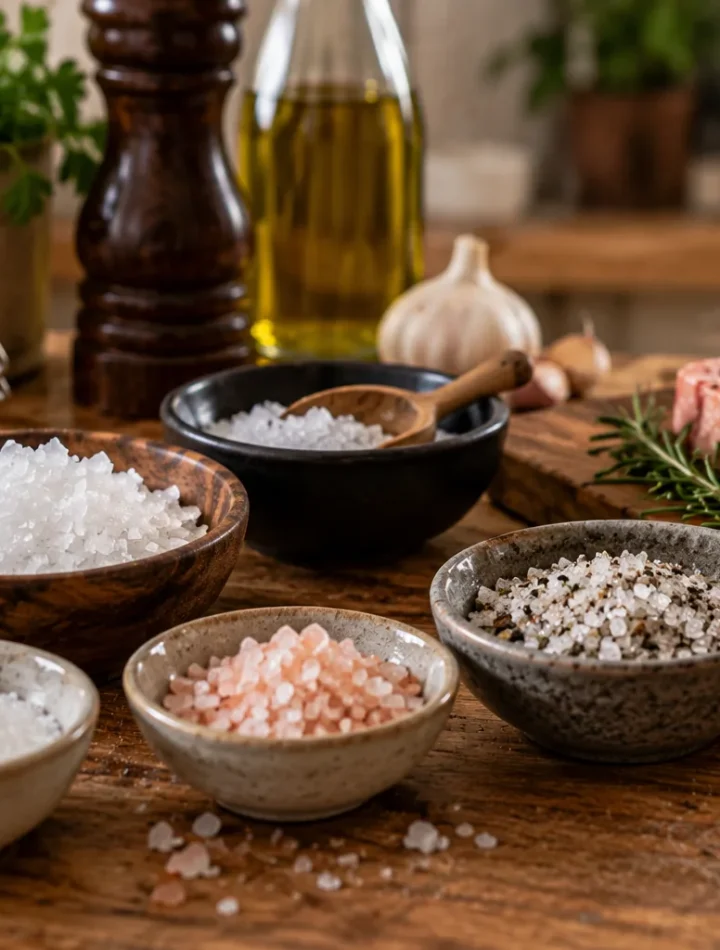
Different salts occupy different volumes
A teaspoon is a measure of volume, not mass.
Fine salt packs differently from large flakes or coarse crystals. Two teaspoons taken from different boxes may therefore contain quite different amounts of sodium chloride.
This is one reason blindly replacing one salt with another by spoon measure can produce surprising results.
For everyday seasoning, your palate remains useful. For baking, preserving, curing or any formula where the concentration matters, weight is the safer language.
Taste before reaching for more
When food seems to need salt, it sometimes needs something else.
A little acidity may provide the contrast that was missing. A sauce may simply need further reduction. A dish might lack aroma, heat or freshness.
Salt should not become the automatic answer to every dull mouthful.
Seasoning well means understanding what the dish is asking for.
Sometimes the answer is salt. Sometimes it is lemon. Sometimes it is another five minutes in the pan.
Knowing the difference is where seasoning becomes cooking.