Let the Meat Be the Hero
The word charcuterie comes from French words associated with flesh and cooked food. Traditionally, it describes the craft of preparing and preserving meat products, particularly pork, including sausages, hams, pâtés, terrines and confit. The work belongs to the garde manger tradition of the professional kitchen.
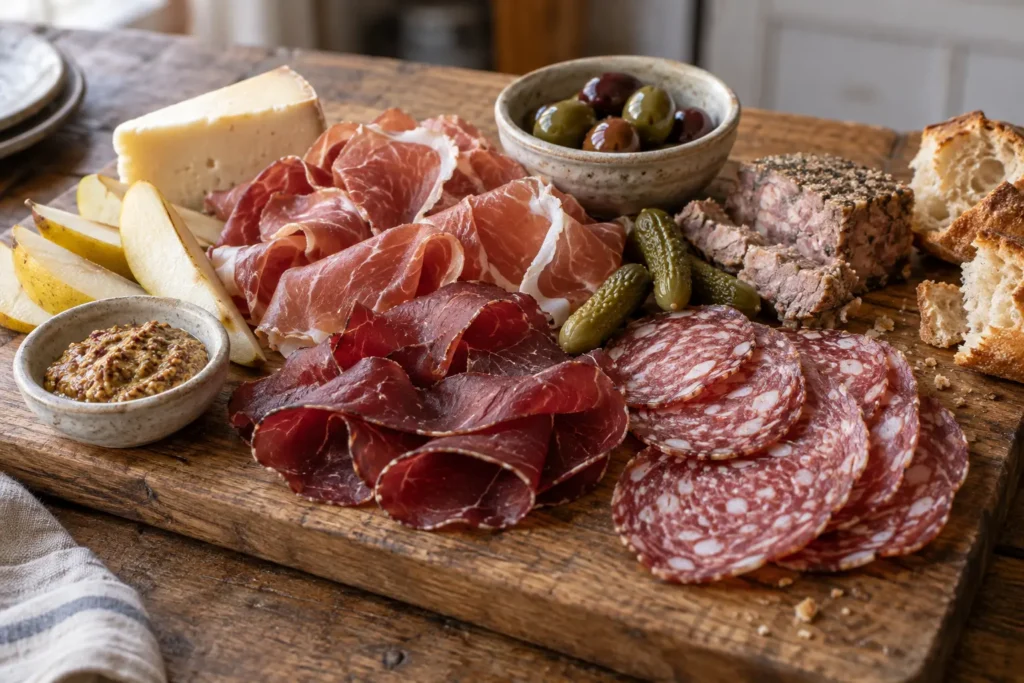
Long before refrigeration, salting, drying, smoking and cooking helped people preserve meat. Today, we continue to make and serve charcuterie primarily because those processes create flavours and textures worth seeking out.
Set the Scene
A charcuterie board works equally well as a leisurely lunch, part of a buffet or the beginning of a meal. Add crusty bread, perhaps some cheese and a glass of wine, or a cool ginger ale over ice, and it can be generous without becoming formal.
Creating a good board is relatively easy. Variety is the key, but abundance is not the same as excess. A few well-chosen meats and accompaniments will usually make a more coherent board than every item you could find packed into the available space.
Choose Your Colours
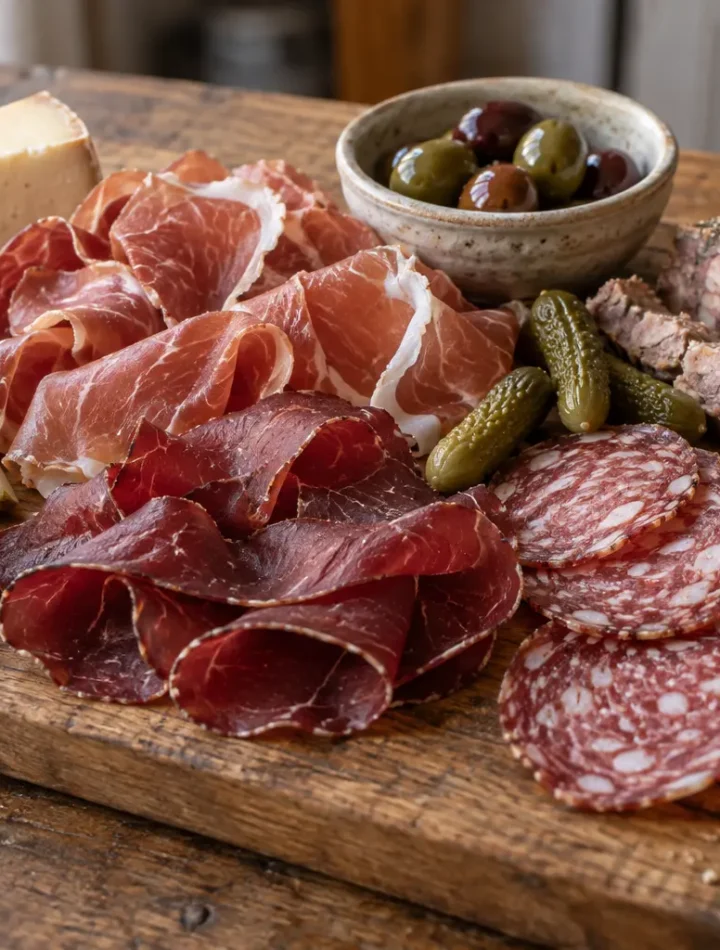
Charcuterie ranges from delicate pinks to deep reds, often patterned with creamy white fat, black pepper, herbs, paprika or mustard seeds. Select meats with visible differences so that the board has contrast before you add anything else.
Tomatoes, roasted peppers, pickled cabbage, cornichons, onions, radishes, grapes or olives can bring brighter colours. Choose accompaniments that you genuinely want to eat with the meat; decoration that nobody touches is simply clutter.
Think About Texture
Include a mixture of textures. Air-dried duck breast, prosciutto or bresaola can be silky; a coarse salami or firm cured sausage brings more resistance; pâté offers richness; cornichons, celery, radishes or crisp bread provide snap.
Cheese is not technically charcuterie, but it is a welcome companion. One or two contrasting choices, such as a soft cheese and a firm or blue one, are normally enough.
Build the Flavours
There is no shortage of flavour: pork, duck, beef or venison seasoned with rosemary, sage, thyme, fennel, juniper, black pepper, garlic, mustard, paprika or chilli. Rather than selecting several products that taste much the same, look for contrast between mild and robust, lean and rich, smoky and clean.
Acid matters. Pickles, mustard and sharp fruit cut through fat and reset the palate. A restrained sweet element, such as figs, grapes, apple, chutney or a little honey, can balance salt without turning the board into a pudding.
Arrange the Board
Let the meat remain the hero. Plain plates, slate or wooden boards provide a calm background, although food should be placed only on clean, food-safe surfaces.
Begin with any small bowls for olives, mustard, pickles or chutney. Position your larger cheeses or pâté next, then arrange the meats around them.
Fold broad slices of ham, coppa, duck breast or bresaola to create height and make individual pieces easy to lift. Fan neat slices when the edge or marbling deserves to be seen. Loose, irregular piles of smaller salami slices prevent the board from looking too formal; orderly rows elsewhere prevent it from looking chaotic.
Long, thin slices can be rolled, while firm sausage can be cut on the diagonal. Leave a little breathing room. You can always refill a board from chilled supplies, and it is far better than allowing the whole quantity to sit out for hours.
Use cocktail sticks or small forks where they make serving easier, but do not let accessories compete with the food. If using metal picks, make certain they are intended for food and easily visible.
Accompany and Accessorise
Bread is close to essential. A homemade pagnotta works beautifully, as do baguette slices, grissini or plain crackers that will not overwhelm the meat.
Pickles complement, rather than compliment, fattier meats because their acidity cuts through the richness. Roasted Mediterranean vegetables, tomatoes and stuffed peppers add colour and substance. Nuts can bring crunch, provided your guests know they are present and allergy considerations have been addressed.
Serve perishable meats, soft cheeses and pâtés chilled, then bring out only what you expect to use. As a practical safety rule, do not leave perishable food at room temperature for more than about two hours, or one hour in very hot conditions. Use separate utensils where necessary and replenish from the refrigerator rather than topping up old food with new.
A successful board should feel generous, relaxed and easy to share. Give each item enough room to be recognised, balance richness with acidity and crunch, and let the meat do what the title promised: be the hero.