There is an old idea that improvisation is the art of being prepared. Whoever first phrased it neatly understood the important part: useful improvisation rarely begins with panic.
What Is Fieldcraft, Exactly?
In my former service, fieldcraft meant working effectively when conditions were imperfect and comfort was in short supply. A kitchen might be separated from the weather by little more than canvas. The wind had opinions, the ground was seldom level and the equipment available was not necessarily the equipment you would have chosen.
Yet people still had to be fed. Water had to be made safe, food protected, heat managed and timings coordinated. A hot meal did more than satisfy hunger. It restored routine, warmed hands and reminded everybody that the day had a shape.
Technique is what remains when the equipment is wrong.
What Did a Muddy Field Teach Me?
Detachments across the United Kingdom, exercises in the former West Germany before the Berlin Wall fell, and brief incursions into the East all reinforced the same lesson: preparation creates room for flexibility.
For the uninitiated, an exercise in this context is not a visit to the gym. It is a military drill, designed to test people, procedures and equipment until the response becomes dependable. Repetition reveals what a written plan overlooks. The lid that does not quite fit, the route that takes longer in rain and the vital item stored beneath everything else are all discovered while there is still an opportunity to learn.
A field kitchen teaches economy of movement. Ingredients are prepared before hunger becomes urgent. One vessel performs several jobs. Clean water is protected. Waste is controlled because space is limited and resupply may not be convenient. A brew-up is not merely refreshment; at the right moment it is morale infrastructure.
None of this turns dinner into a campaign. It simply reminds us that calm cooking is normally arranged before the pan becomes hot.
Prepare Before You Cook
Read the recipe from beginning to end. This sounds insultingly simple, yet it prevents a remarkable number of problems. You may discover that an ingredient must marinate, a dough must rest or the oven must preheat before anything else happens.
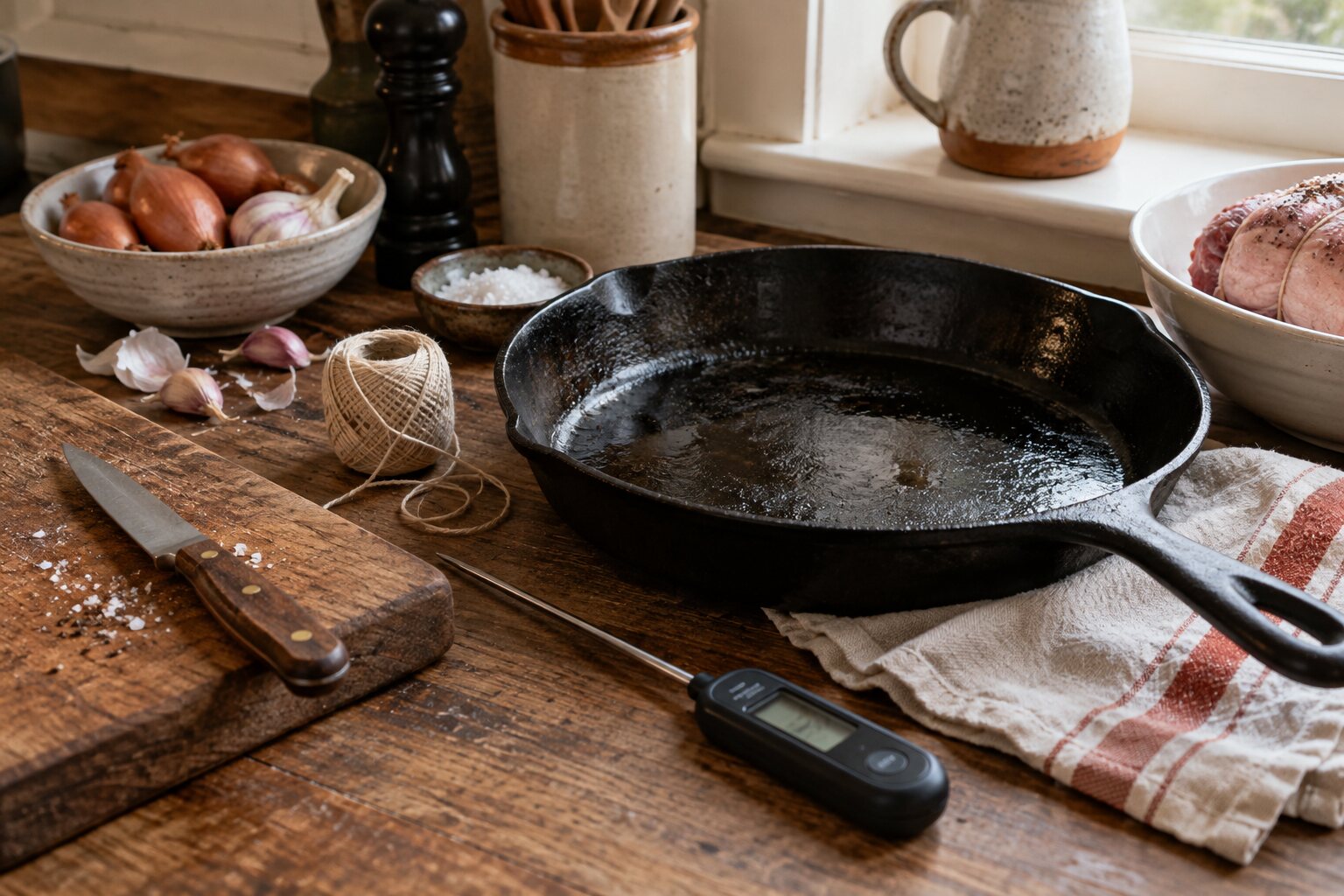
Clear a working area. Take out the equipment. Weigh or measure anything that will be needed in quick succession. Chop the onion before heating the oil if the next stage leaves no time for chopping. Keep raw ingredients, cooked food and waste organised so they do not compete for the same small patch of worktop.
Preparation does not mean arranging twenty tiny bowls for the benefit of an imaginary television camera. It means removing avoidable surprises.
One Vessel, Several Jobs
One-pot cooking is often praised for saving washing-up, but its real advantage is continuity of flavour. Brown meat or vegetables in the same pan that will hold the sauce. The browned residue on the base, provided it has not burnt, can be loosened with liquid and returned to the dish. Aromatics can soften in the rendered fat. Each stage hands something to the next.
The order matters. Ingredients that need colour require contact with a hot surface, which means the pan must not be overcrowded. Delicate herbs and quick-cooking vegetables may need to wait until later. A thickening ingredient added at the wrong moment can catch on the base or prevent other ingredients from browning.
Use one vessel when it helps the food. Do not turn it into a rule so rigid that fish, rice and green vegetables are forced to endure the same cooking time merely to save a saucepan.
Heat Is a Tool, Not a Setting
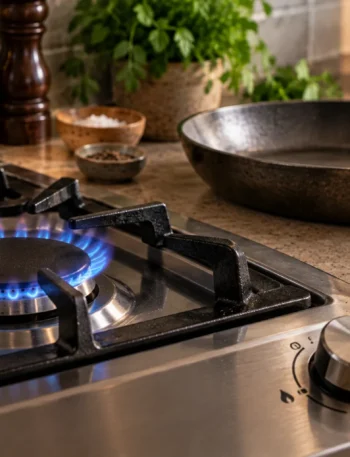
A dial marked from one to nine does not tell you the temperature of the pan. It tells you how much energy the appliance is attempting to provide. The pan, its contents, the hob and time determine the rest.
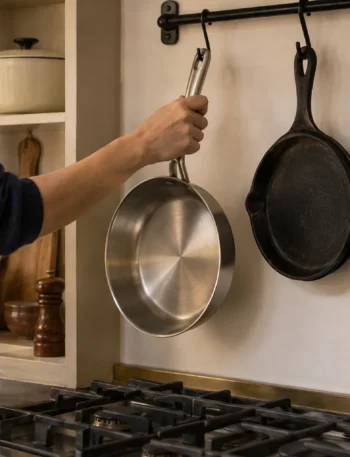
Learn to change the heat before the food demands it. A heavy pan retains energy after the dial is lowered. A thin pan reacts more quickly. Adding a large quantity of cold food can reduce the temperature sharply. A lid traps heat and moisture; removing it encourages evaporation.
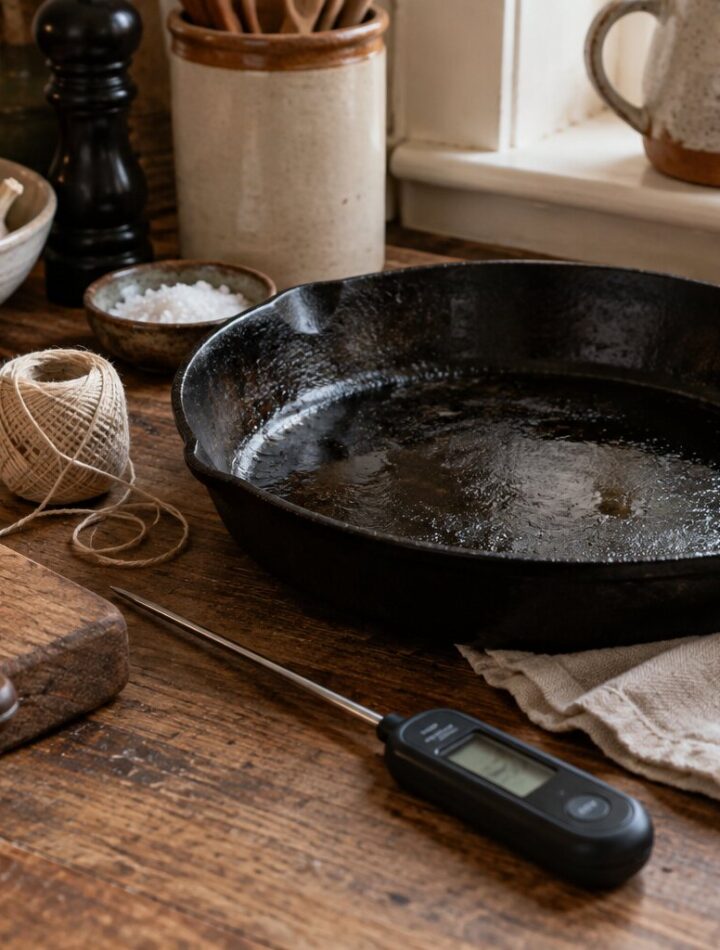
Listen as well as look. An aggressive crackle may be correct for a brief sear and disastrous for garlic. Silence from a pan that should be frying usually means the temperature has fallen. Smell often warns of scorching before colour makes it obvious.
Heat management is a skill, not obedience to a number.
Use Less Liquid, Then Adjust
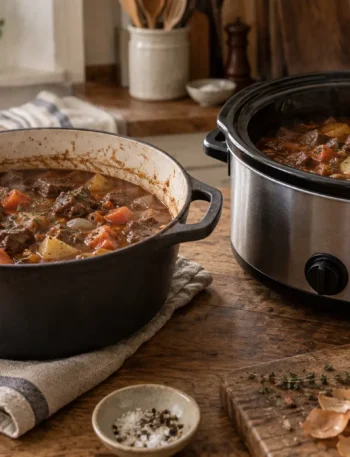
Liquid is easy to add and slow to remove. A recipe designed for a broad pan may reduce differently in a narrow pot. A stew in the oven will behave differently from the same ingredients in a tightly covered slow cooker. Vegetables and meat release their own juices as they cook.
Begin with enough liquid for the method, but do not drown the ingredients out of caution. Add more if the pan becomes dry or the food requires it. If a sauce is too thin, remove the lid and allow it to reduce safely while you watch it. Reduction concentrates salt as well as flavour, so final seasoning belongs near the end.
Improvise After You Understand the Rule
Improvisation is not the random substitution of everything a recipe contains. It begins by understanding what an ingredient does.
Is it providing acidity, sweetness, fat, structure, moisture or aroma? If you have no lemon, another suitable acid may restore balance, but it will not reproduce the same flavour. If a recipe relies upon egg to set, omitting it is not a casual adjustment. If a thick stew calls for a floury potato, a waxy one will remain intact and change the result.
Substitute by function, then acknowledge the difference. Write down what you changed. A successful accident becomes knowledge only when you can repeat it.
Discipline Without Drama
Your kitchen may be small. The oven may be temperamental. Somebody may arrive late, an ingredient may be missing and the first pan may turn out to be too small. None of that requires alarm.
Stop, assess and simplify. Move the food away from excessive heat. Choose the most important part of the meal and protect it. Serve one element later if necessary. A calm plate of good food is preferable to five components damaged in pursuit of simultaneous perfection.
Fieldcraft does not make cooking joyless. It creates the confidence from which enjoyment grows. Know where the tools are, prepare before the heat, understand the method and leave enough attention available to adapt.
Treat the next meal as a small exercise. Afterwards, ask what worked, what did not and what you would arrange differently next time. Then make tea.