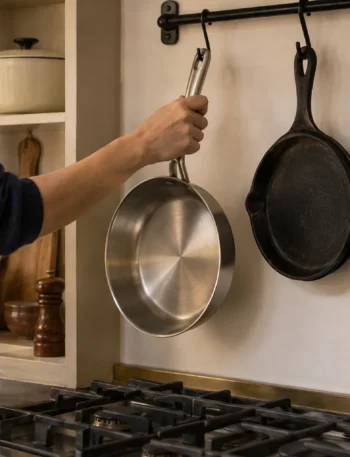
Choosing the right pan gives you an appropriate tool. The next question is what you do with the heat beneath it.
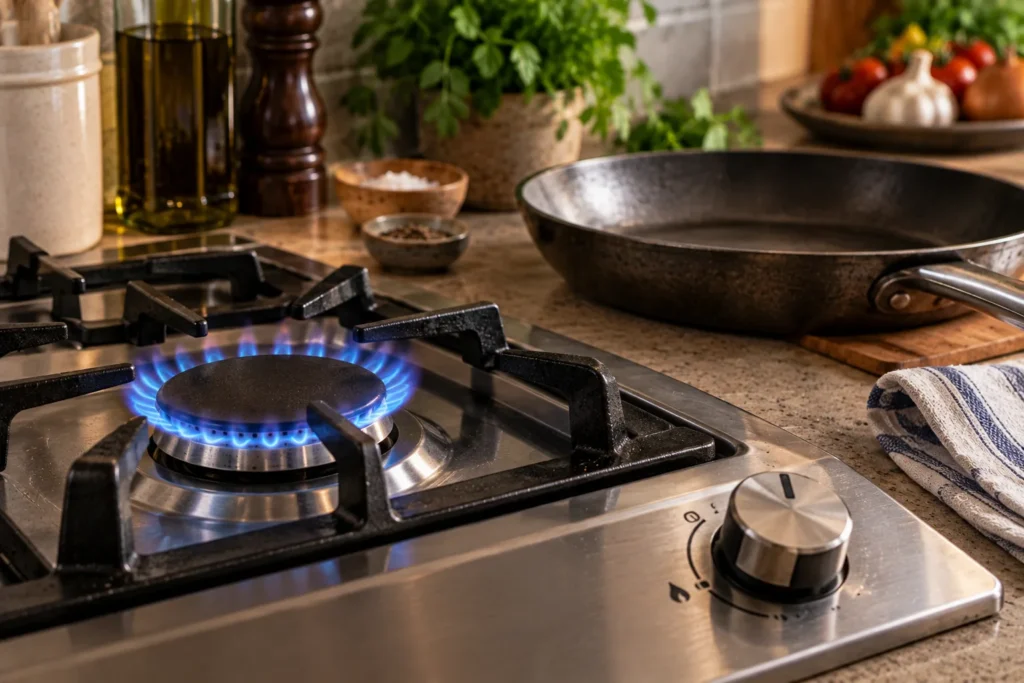
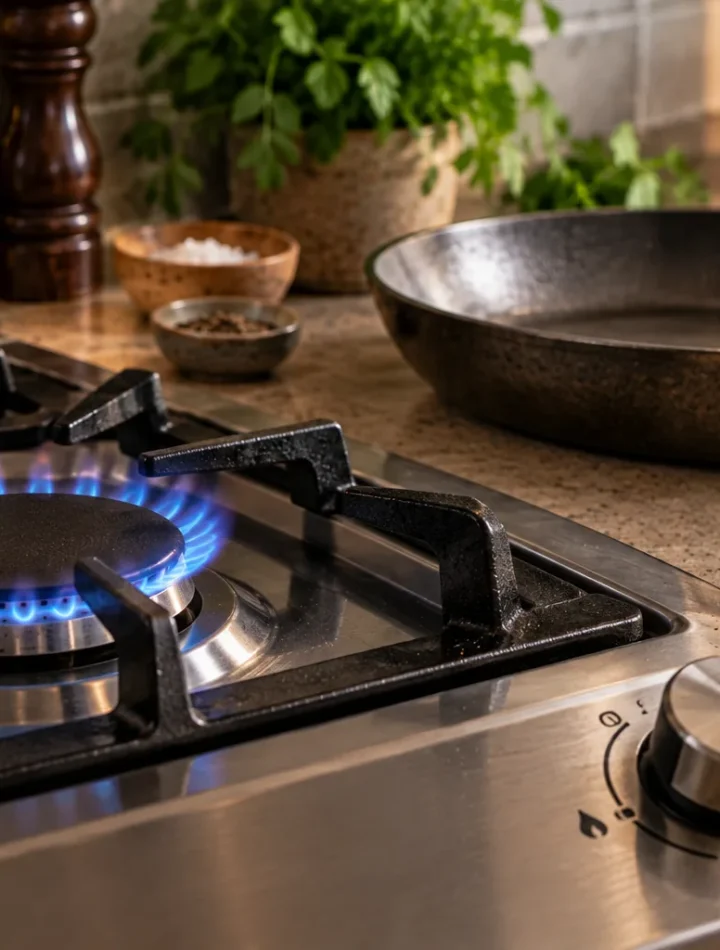
Recipes often say low, medium or high heat as though every cooker shares the same three positions. They do not. A powerful gas burner, induction zone and ageing electric hob can deliver very different results despite apparently similar settings.
The food, not the dial, tells you what the heat is doing.
Preheating has a purpose
Putting food into a cold pan and gradually warming everything together is correct for some preparations and disastrous for others.
When browning meat or vegetables, the pan generally needs enough stored heat that adding cold food does not immediately collapse its temperature. Without that heat, released moisture accumulates and the food begins to steam.
Preheating does not mean making every pan as hot as possible.
An empty non-stick pan should not be left over intense heat unnecessarily. Butter will tell you rather dramatically when a pan is too hot. Delicate fish may require considerably gentler treatment than a steak.
The aim is appropriate heat, not maximum heat.
Listen to the pan
Sound is one of the kitchen’s best thermometers.
A lively sizzle indicates moisture is rapidly turning to steam. A weak hiss can mean the pan has cooled. Violent spitting may mean excess water has met very hot fat.
Smell matters too. Toasting spices become aromatic before they burn. Butter changes from foaming to nutty and then, if ignored, bitter and black.
Cooking becomes easier when these signals start to matter more than the number printed beside the control.
Crowding changes the job
A pan can be hot enough and still fail to brown food if too much is added at once.
Every cold ingredient absorbs heat. Moisture escapes. Pack the pan tightly and steam becomes trapped between pieces.
If browning matters, leave room.
Cooking in two batches may feel slower, but it is often quicker than waiting for an overcrowded pan to evaporate a pool of liquid before browning can begin.
Turn the heat down before trouble
Heat controls have more than one useful direction.
If garlic is colouring too quickly, lower the heat. If a sauce is reducing before its flavours have developed, lower it. If the outside of something is burning while the centre remains raw, continuing at the same temperature with greater determination will not improve matters.
Moving a pan partly off the heat is also a control. So is adding a small amount of cooler liquid. So is simply waiting.
Residual heat still cooks
A pan does not become cold because the hob is switched off.
Heavy cookware may retain substantial heat. Eggs continue setting. Sauces continue reducing. Butter can continue browning.
That stored heat can be useful. Spinach can wilt in a hot pan after the burner is off; delicate sauces can finish away from direct heat.
Learning to use residual heat is part of learning the pan itself.
The cooker’s dial gives you an instruction. The pan gives you evidence.
When the two disagree, believe the pan.