Waste is often a buying problem wearing a cooking disguise.
What Is Really at the Back of the Fridge?
Look honestly. There is the half-used container bought for one recipe, the bag of salad that has achieved liquidity and the last spoonful of yoghurt hidden behind a taller jar. Sunday’s chicken carcass was stock-in-waiting until Monday’s good intentions turned into Tuesday’s bin.
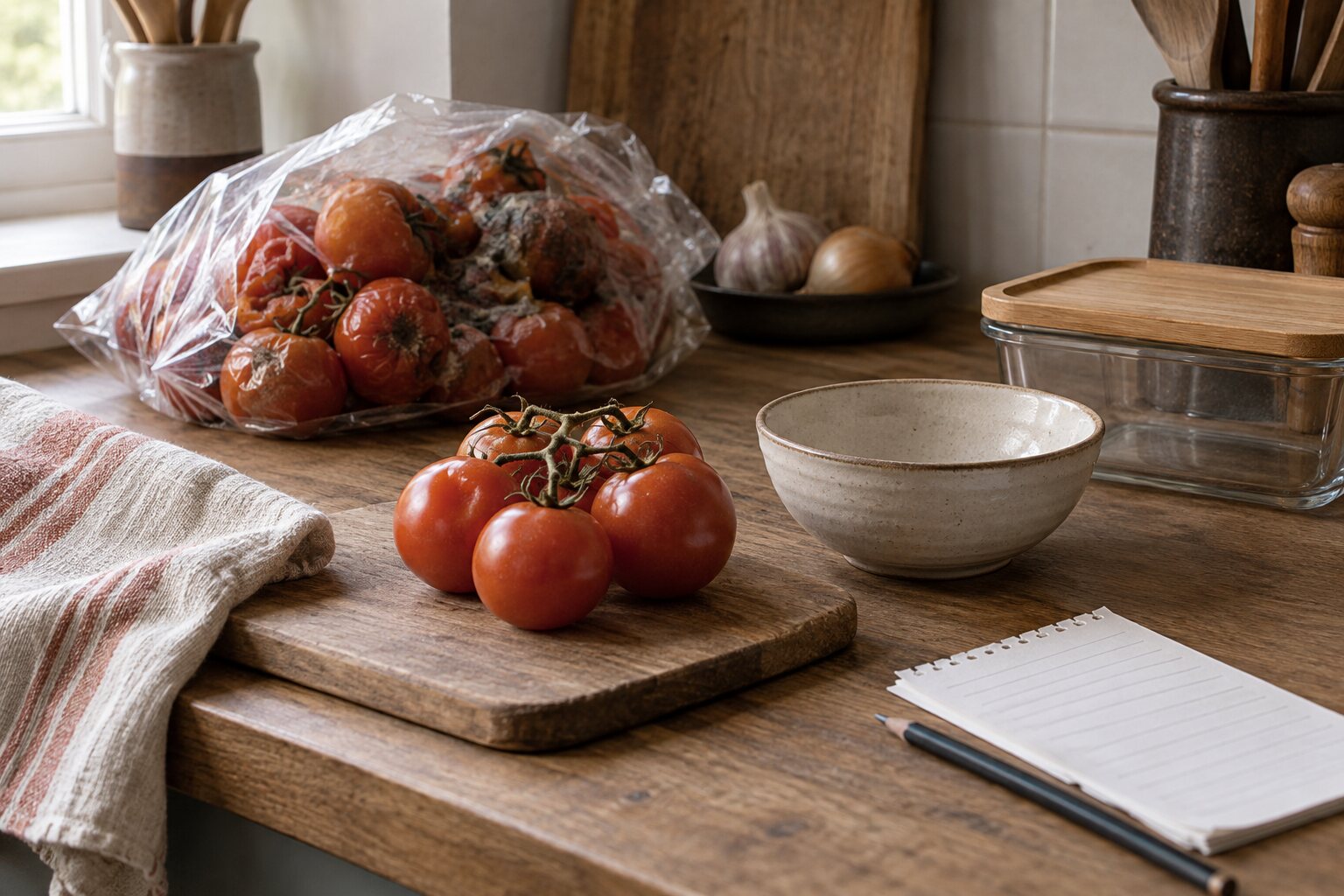
These are not always cooking failures. Often, they are purchasing decisions that outran the plan. The final act happens at the bin, but the first occurred at the shop several days earlier.
Food waste cannot be eliminated completely. Peelings, bones and items that spoil unexpectedly will exist in a working kitchen. The useful question is not whether you can become perfectly waste-free. It is how much edible food you can stop buying without a clear destination.
Shop for Meals, Not for Your Imagined Self
There is an aspirational person who lives in almost every supermarket trolley. This person eats an immaculate salad at lunch, cooks a different cuisine each evening and always uses the entire bunch of fresh herbs. They are energetic, organised and apparently never invited elsewhere at short notice.
Do not shop for that person unless they reliably appear in your kitchen.
Begin with the week as it actually exists. Which evenings will you cook? Who will be there? Which meal needs to be quick, and which can provide leftovers? What is already in the refrigerator, freezer and larder? Plan around those facts, write the list and deviate only when the deviation has a purpose.
An unexpected bargain is not a saving if it replaces something already waiting at home. A family-sized pack is not better value when half of it spoils. Cost per gram matters only for the grams you use.
Give Every Ingredient More Than One Destination
Planning does not require seven entirely separate meals. In fact, that is how half-used ingredients multiply.
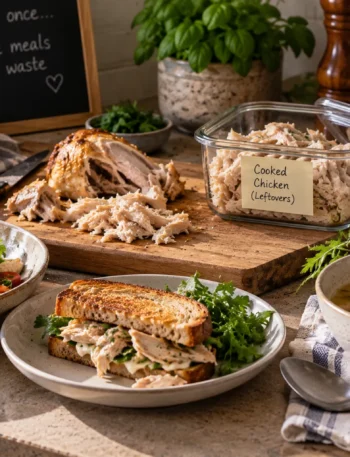
Choose foods that can travel. A tray of roasted vegetables might accompany dinner, become part of tomorrow’s lunch and finish in a soup. A bunch of herbs can flavour a sauce, brighten a salad and be chopped into butter before it wilts. Cooked chicken can reappear in sandwiches, fried rice or a pie, provided it has been cooled, stored and reheated safely.
This is not eating the same meal repeatedly. It is giving one piece of work several useful outcomes.
Build flexibility into the plan. A soup, frittata, curry, stir-fry or pasta sauce can accept small quantities that would otherwise remain stranded. The aim is not to conceal unsuitable leftovers in any available dish. It is to recognise combinations before the ingredients decline.
First In, First Out
Professional stores use rotation because memory is unreliable. A domestic kitchen benefits from the same principle.
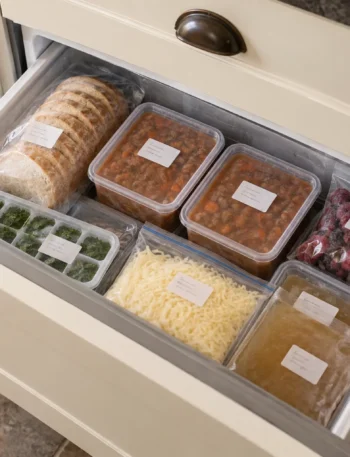
Place newly bought items behind the older ones. Keep a visible area in the fridge for foods that need attention soon. Label freezer containers with their contents and date, because frozen brown liquid becomes anonymous remarkably quickly. Freeze in portions you are likely to defrost rather than one heroic block.
Treat dates intelligently. A use by date concerns safety and should be followed. A best before date concerns quality; food may still be usable afterwards if it has been stored correctly and shows no sign of spoilage. Do not rely on smell to judge food carrying a use-by date, as harmful bacteria do not necessarily announce themselves.
Cool cooked food promptly, refrigerate it, and follow current food-safety guidance for storage and reheating. Thrift is not improved by gambling with somebody’s health.
The Second Life of Food
Once an ingredient is in the kitchen, the remainder can become a resource.
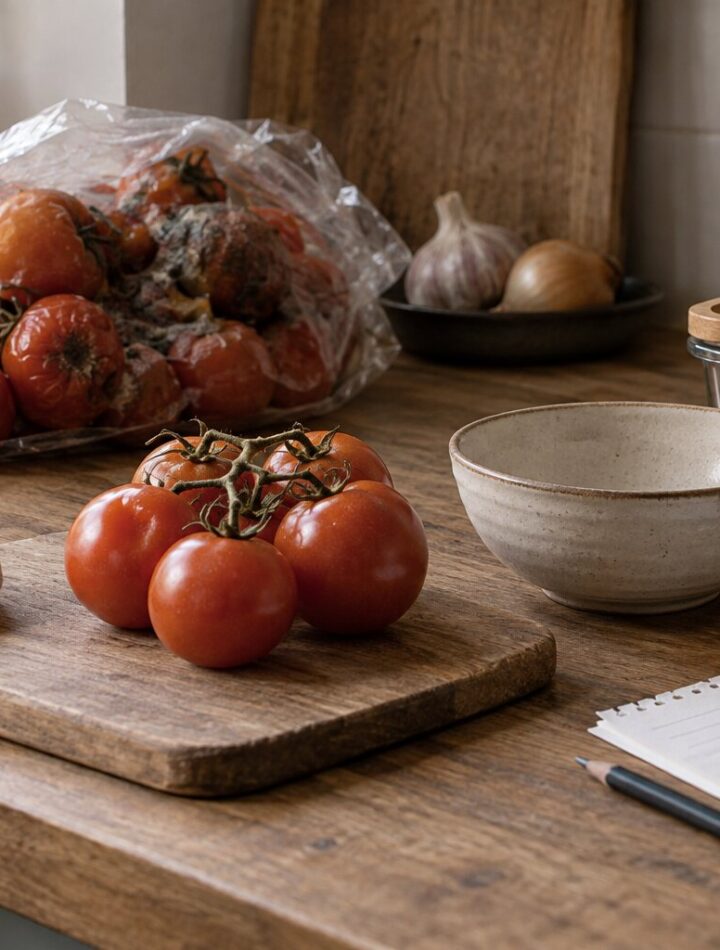
Bones and suitable trimmings can make stock. Keep them cold, freeze them if they will not be used promptly, and do not imagine that every scrap belongs in the pot. Spoiled vegetables do not improve through boiling, while strongly flavoured brassicas can overwhelm a stock. Clean onion ends, carrot trimmings, celery, herb stalks and cooked or raw bones all have possibilities when handled properly.
Stale bread has a distinguished second career. It can become breadcrumbs, croutons, bread pudding, panzanella or a thickener for soup and sauce. Stale is not the same as mouldy. If bread shows mould, discard the loaf rather than cutting away the visible patch, because growth may extend beyond what you can see.
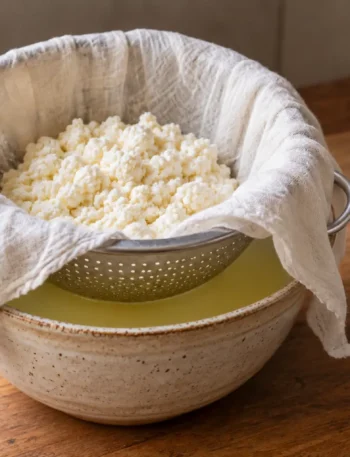
Whey left from suitable cheesemaking can be used in bread, soup or the cooking liquid for grains, as discussed elsewhere on Larder & Ladle. Its acidity and salt level vary, so taste and adapt rather than applying a blind ratio.
Fruit approaching over-ripeness can often be cooked into compote, crumble or sauce. Soft herbs can become pesto or herb oil if they remain sound. Milk nearing its use-by date might become a white sauce or pudding while it is still safe, but cooking does not rescue food that has already spoiled.
Batch Cooking with a Purpose
Batch cooking works when the portions have a planned future. Doubling a recipe and leaving the extra pan in the fridge is not a strategy.
Decide before cooking what will be eaten, chilled or frozen. Use shallow containers where appropriate so food cools efficiently. Label each portion. Keep a simple freezer list if your drawers are deep enough to hide their contents. Remove something before adding something else, and schedule freezer meals into the week rather than waiting for an emergency.
A well-used freezer is a pause button, not an archaeological site.
Chickens, Compost and the Limits of Resourcefulness
When I kept chickens, suitable kitchen leftovers sometimes found a willing audience. That does not make every household scrap safe or lawful animal feed. Rules vary by place, and some foods are harmful to animals. Anyone feeding livestock or pets should follow current local guidance rather than relying upon the animal’s enthusiasm.
Composting can return unavoidable plant waste to the soil, but it comes after prevention and edible reuse. The most environmentally satisfying peel in the compost bin is still less valuable than the edible food that never needed to be discarded.
Three adult daughters sharpened my instinct for noticing what crosses the threshold and what disappears. Feeding a household teaches you that waste is not a single dramatic event. It is a series of small habits: buying without checking, opening a second packet, overlooking a portion and cooking too much without a plan.
Audit the Bin
For one week, notice what you throw away. Do not begin with guilt. Begin with evidence.
Was it bought in too great a quantity? Stored badly? Forgotten? Rejected by the people you expected to eat it? Did a recipe leave an awkward remainder? The answer tells you where to intervene next time.
Buy a smaller pack. Freeze half on the day of purchase. Choose loose produce. Plan two uses for the same ingredient. Cook less. Serve modest portions and offer seconds. Move the foods that need using to the front.
The aim is not a perfect bin. It is a kitchen in which purchases become meals rather than expensive intentions.
Audit the bin, adjust one habit and begin again.