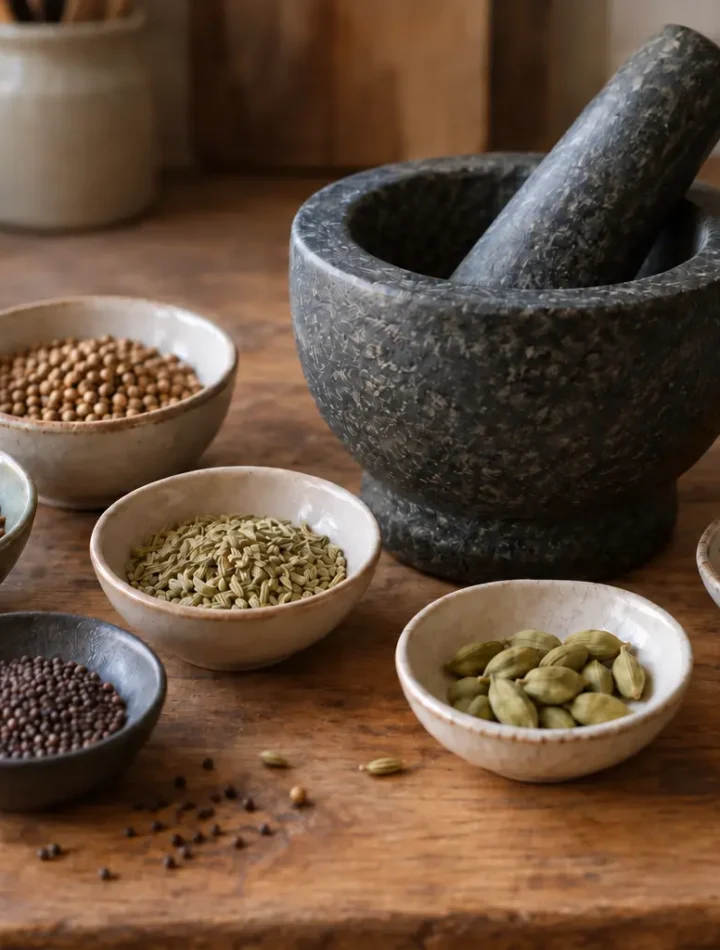
A spice is an aromatic or pungent plant substance used to flavour food. In culinary terms, spices commonly come from seeds, fruits, bark, roots, rhizomes, flower buds or other parts of a plant, while the word herb usually refers to its leaves and tender stems. The boundary is not absolute. Nature rarely arranges herself for the convenience of a kitchen glossary, but it is a useful place to begin. Salt, despite sitting beside the spice jars, is a mineral rather than a spice.
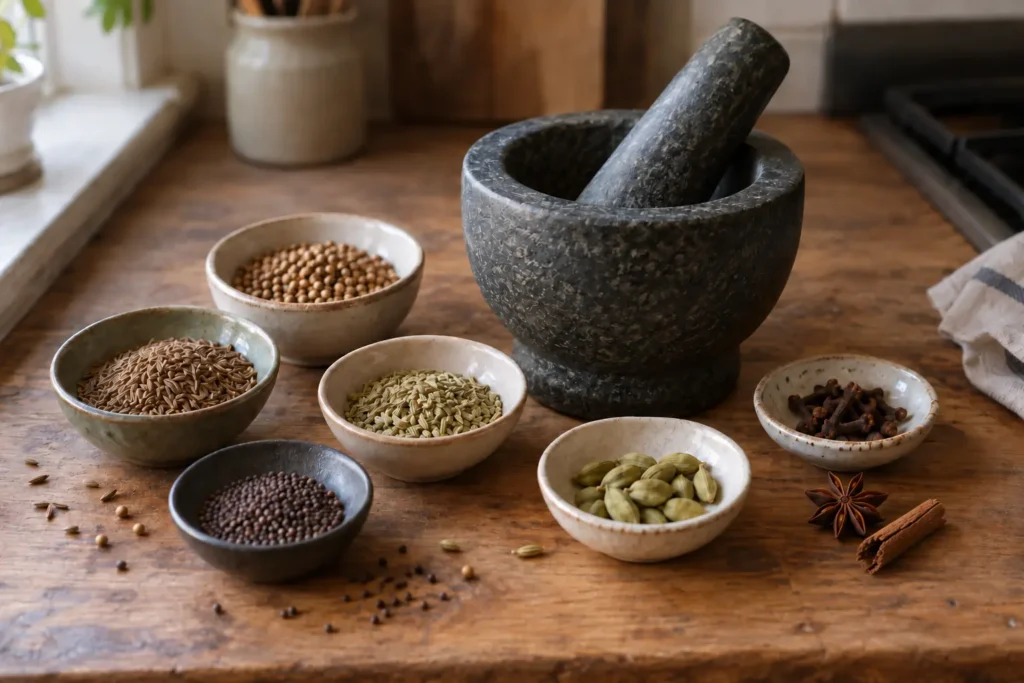
I make no assumptions about whether you are new to the kitchen or no longer require a map to find it. Arriving there for the first time, and many times afterwards, can be daunting. In some ways, seasoning food is like learning a language. You begin with a few simple words, perhaps salt, pepper and chilli. Given time, exposure and a willingness to learn, those separate words become phrases, and the phrases develop into a language that belongs to you.
Spices release their aromatic compounds in different ways. Some are crushed, grated or ground; some benefit from gentle toasting; others are bloomed briefly in fat or steeped in liquid. Understanding the difference is more useful than merely collecting jars.
Why Consider Fairtrade?
Spices once travelled along complex trading networks that linked Asia, Africa, Europe and the wider world. The search for profitable routes helped drive exploration, empire and conflict. Their history is not merely one of colour and wonderment: control of valuable commodities brought exploitation and violence as well as cultural exchange.
That history gives us good reason to think about the people behind what we buy. Fairtrade certification is not a promise that every problem has been solved, nor is it the only credible ethical model. It does, however, apply published standards covering matters such as labour rights, working conditions, environmental protection and measures intended to prevent child and forced labour. Other reputable direct-trade and independently certified suppliers may pursue similar aims.
Ethical purchasing therefore requires a little more than choosing the most attractive label. Look at what a supplier can tell you about origin, growers, standards and traceability. Sometimes a better product costs a little more; sometimes buying less, but buying it fresher, is the wiser bargain.
Quality and Freshness
Where should you buy spices: a supermarket, specialist shop, online supplier or directly from a producer? Any of these can be the right answer. Turnover, storage and transparency matter more than the type of shop.
Whole spices generally retain their character longer than ground ones because less surface area is exposed to air. Ground spices do not suddenly become unsafe after six months, but their aroma and flavour gradually fade. Rather than relying upon a rigid deadline, buy quantities you are likely to use, label them with the purchase date and trust your senses. If a spice that should smell vivid has become dusty and faint, it will contribute very little to your cooking.
Specialist and online shops can offer a wider selection and useful information about origin or harvest, but freshness is never guaranteed by the sales channel alone. A busy local shop serving a community that cooks with spices every day may have excellent turnover. Compare suppliers, read the information they provide and avoid buying enormous bags merely because the price per gram appears irresistible.
Avoid Moisture, Heat and Light
Keep spices in clean, dry, airtight containers, away from the cooker, direct sunlight and other sources of heat. A cool cupboard is normally preferable to the refrigerator, where condensation can become a problem when a cold container is repeatedly opened.
Do not shake a spice jar directly over a steaming pan. Steam may enter the container, encouraging clumping and, in sufficiently damp conditions, spoilage. It also makes the quantity difficult to judge. Spoon what you need into your hand or a small dish first, then add it to the pan.
If the contents become damp, visibly mouldy or otherwise suspect, discard them. A washable glass jar can be thoroughly cleaned and dried before reuse; there is rarely a need to throw the container away.
Toast, but Pay Attention
Gentle dry-toasting can deepen the aroma of many whole spices, including cumin, fennel, coriander and mustard seeds, cardamom pods, cinnamon and star anise.
Place the spice in a dry pan over a low to medium heat and keep it moving. Remove it as soon as it becomes fragrant, which may take only a minute or two. Do not wait for smoke: the distance between toasted and burnt can be remarkably short. Allow it to cool before grinding, particularly if you are using an electric grinder.
Not every spice needs to be toasted, and ground spices burn quickly. They are often better added to warm oil for a brief bloom before other ingredients or liquid go into the pan.
Experiment with Tried and Trusted Ideas
Live a little dangerously. Take a recipe you know well and change one thing. Add a small amount of a new spice, record how much you used and taste the result. Next time, adjust it or try something different. Could anything be removed to allow the new flavour to speak more clearly? Is there another ingredient that would bring balance?
Changing one or two things at a time teaches you far more than emptying half the spice cupboard into the same pot.
Think Beyond the Usual Dish
Cumin is strongly associated with chilli con carne, but no honest percentage can tell us how much of a chilli’s identity belongs to one spice. Recipes vary enormously, and flavour comes from the whole arrangement: chillies, aromatics, herbs, spices, meat or vegetables, cooking method and time.
Instead, think about each spice beyond its most familiar setting. A little crushed cumin can be excellent with roast potatoes or carrots; fennel seed can lift pork, tomato sauces or bread; coriander seed brings citrus warmth to pickles and roasted vegetables. Begin cautiously, taste and learn to trust your instincts.
Storage
Choose airtight containers and keep them cool, dark and dry. Oxygen, warmth, moisture and light all contribute to the loss of aroma. For an ordinary working larder, well-fitted jars and sensible quantities are sufficient; specialist oxygen absorbers are unnecessary and can introduce their own handling concerns.
Once you understand which flavours you return to, making a few small spice blends can be convenient. Label them with their ingredients and date, and avoid preparing more than you will use while the mixture remains lively.
In a later article we shall consider the dependable spices that form the backbone of a useful larder. For now, there is nothing stopping you from stepping forward and meeting the challenge head-on.