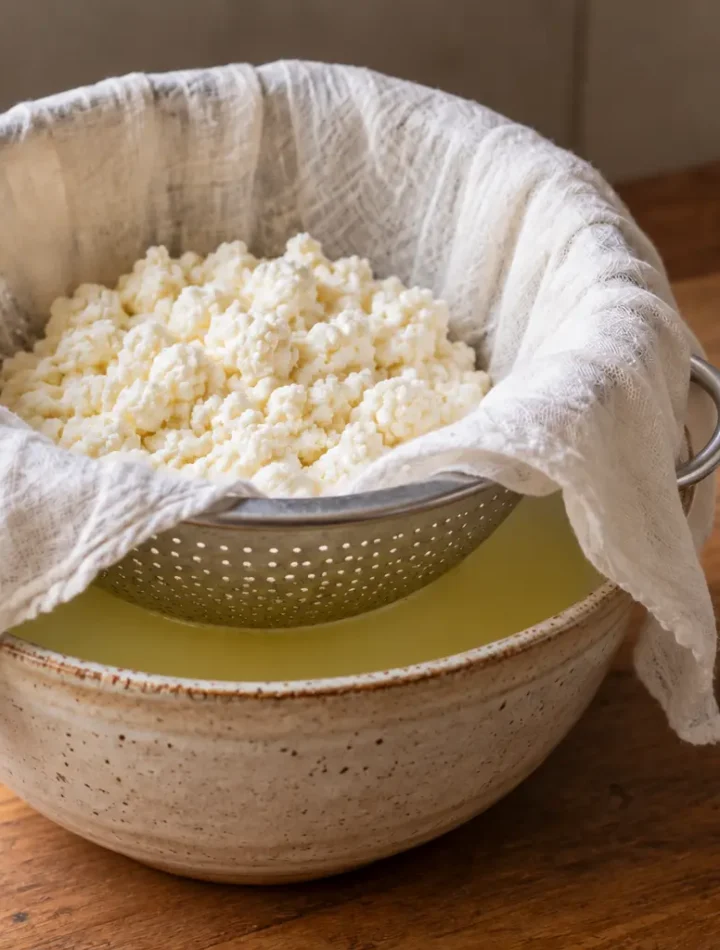
What Is Whey?
Whey is the liquid left when milk coagulates and separates into curds and liquid during cheesemaking or the production of foods such as yoghurt. Its exact composition, and therefore its best uses, depends upon the milk, the culturing or coagulation method, any heat treatment and whether salt has been added.
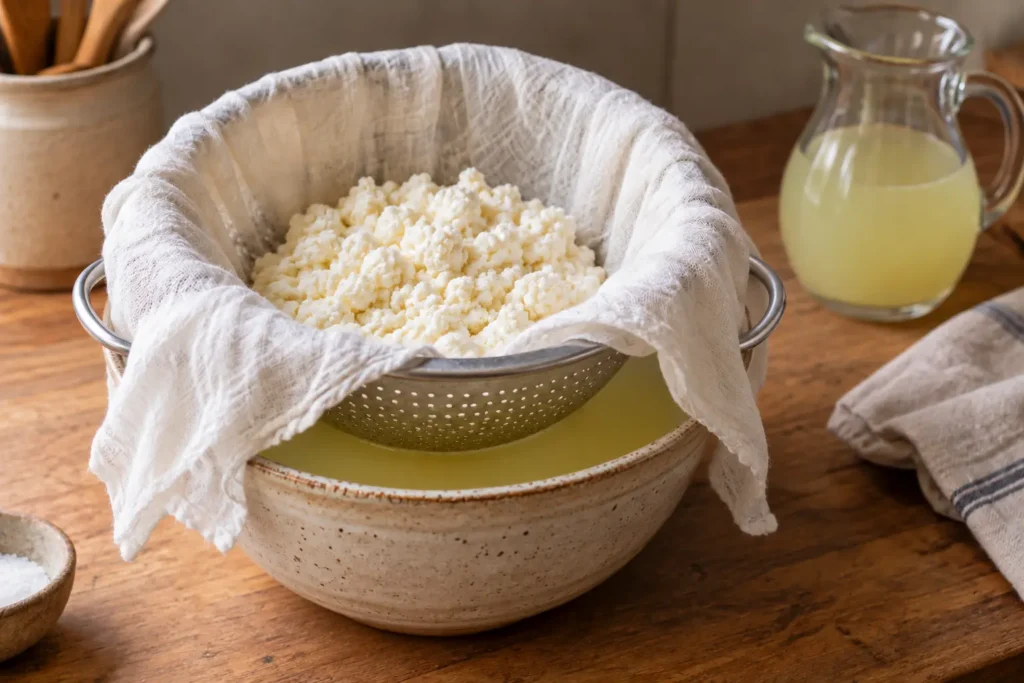
After making paneer for Larder & Ladle, I was left with around three litres of pale yellow whey. Pouring it down the drain seemed an unceremonious end to a useful ingredient, so I began considering what else it might become.
As with most articles in this section, I shall not pretend to cover every possibility. The purpose is to whet your appetite for the subject and give you a safe, practical place from which to begin your own research.
Before using whey, remember that it is perishable. Cool it promptly, store it covered in the refrigerator and use it within a few days, or freeze it in manageable portions. Discard it if it develops mould, an unpleasant odour, unusual fizzing or other signs of spoilage. Whey contains milk proteins and lactose, so it is unsuitable for anyone who must avoid milk allergens and may not suit those with lactose intolerance.
Sweet Whey
Sweet whey is generally produced by rennet-coagulated cheeses. Despite the name, it is not sugary; it is simply less acidic than acid whey.
Make whey ricotta
Traditional ricotta is made by reheating suitable whey so that remaining proteins gather into delicate curds. Yield from home cheesemaking whey can be modest, and success depends upon its acidity and protein content. Fresh milk and a carefully measured acid are sometimes added to improve the yield. It is worth following a tested ricotta method rather than relying upon guesswork.
Use it in bread and dough
Replace some or all of the water in bread, rolls, pancakes or pizza dough with unsalted whey. It contributes milk sugars and proteins, which may encourage browning and add subtle flavour. The effect on dough varies, so begin with a familiar recipe and watch the texture rather than assuming the liquid will behave exactly like water.
Cook grains, pulses and potatoes
Unsalted whey can replace part of the cooking water for rice, barley, oats, lentils or potatoes. Its acidity and dairy flavour will suit some dishes better than others. Start by replacing only a portion of the water and judge the result for yourself.
Add it to soups and stews
Whey can bring gentle acidity and body to a soup or stew. Add it as part of the cooking liquid and allow the dish to cook thoroughly. Highly acidic whey may split or curdle when combined with other dairy ingredients, but that is usually a matter of appearance rather than safety.
It is sometimes claimed that whey should replace the hot water used to stretch mozzarella. That is not a dependable general rule: mozzarella methods rely upon controlling acidity and curd temperature closely. Follow a tested recipe for the particular cheese you are making.
Likewise, butter is made from cream rather than whey itself. Commercial cheesemaking whey can contain a small amount of recoverable fat, but the quantity left after home cheesemaking is usually too small to make butter a practical expectation.
Acid Whey
Acid whey comes from products in which acidification causes the milk to coagulate, including many yoghurts and fresh acid-set cheeses. Paneer made with lemon juice or vinegar also produces acid whey, even if salt is added to the curds later.
Blend it into drinks with care
A small amount can add tang to a fruit smoothie, but whey is not automatically probiotic. Heat can destroy live cultures, and some cheesemaking processes never introduce them in the first place. Treat whey as an ingredient, not as a guaranteed health supplement.
Mixing whey with sparkling water makes a tart, fizzy drink, but it does not make a lacto-fermented beverage. Fermentation requires suitable live microorganisms, controlled ingredients, time and safe handling. If you wish to ferment a drink, use a tested recipe written for that purpose.
Use it in marinades
Acid whey can form part of a marinade for meat or poultry, much as yoghurt or buttermilk might. Keep the food refrigerated throughout marinating, avoid excessively long soaking that could damage its texture, and discard any marinade that has contacted raw meat, or cook it thoroughly.
Bake with it
Its acidity makes acid whey particularly useful in recipes that also contain bicarbonate of soda. It can replace buttermilk or part of another liquid in scones, soda bread, cakes and pancakes, although the acidity of homemade whey varies and may require experimentation.
Salted Whey
Sometimes salt is present before the curds are strained; sometimes it is added only afterwards. Taste the whey before using it and reduce the salt elsewhere in the recipe accordingly.
Salted whey can replace part of the stock or water in savoury soups, stews, bread and grains. Add it gradually: a whole pan of oversalted soup is a high price to pay for thrift.
I sometimes use suitable salted whey as part of the liquid when cooking split peas or red lentils for a hearty autumn soup. Whether a one-to-one substitution works depends entirely upon how salty and acidic the whey is, so taste first rather than treating the ratio as a universal rule.
What Not to Assume
Whey is sometimes recommended online as a plant spray, soil acidifier, hair rinse or animal feed. Those uses are not as simple as they appear. Salt, acidity, fat and microbes can harm plants or attract pests, and an animal’s tolerance depends upon its species, health and the whey itself. Do not feed it to pets or livestock without advice from a veterinarian or suitably qualified animal-nutrition professional. Cosmetic claims about smoother or shinier hair are likewise not a sound reason to pour a perishable food product over yourself.
The kitchen already offers enough worthwhile possibilities. Use whey promptly, safely and with a little imagination, and what first appeared to be a waste product can earn a useful second life.