

Pesto (Italian: [ˈpesto], Ligurian: [ˈpestu]), or (to refer to the original dish) pesto alla genovese (Italian pronunciation: [ˈpesto alla dʒenoˈveːse, -eːze]), is a sauce originating in Genoa, the capital city of Liguria, Italy.
It traditionally consists of crushed garlic, European pine nuts, coarse salt, basil leaves, and hard cheese such as Parmigiano Reggiano or Pecorino Sardo (cheese made from sheep’s milk), all blended with olive oil. Strictly speaking, pesto is a generic term for anything that is made by pounding; that is why the word is used for several pestos in Italy. Nonetheless, pesto alla genovese (“Genoese pesto”) remains the most popular pesto in Italy and the rest of the world.
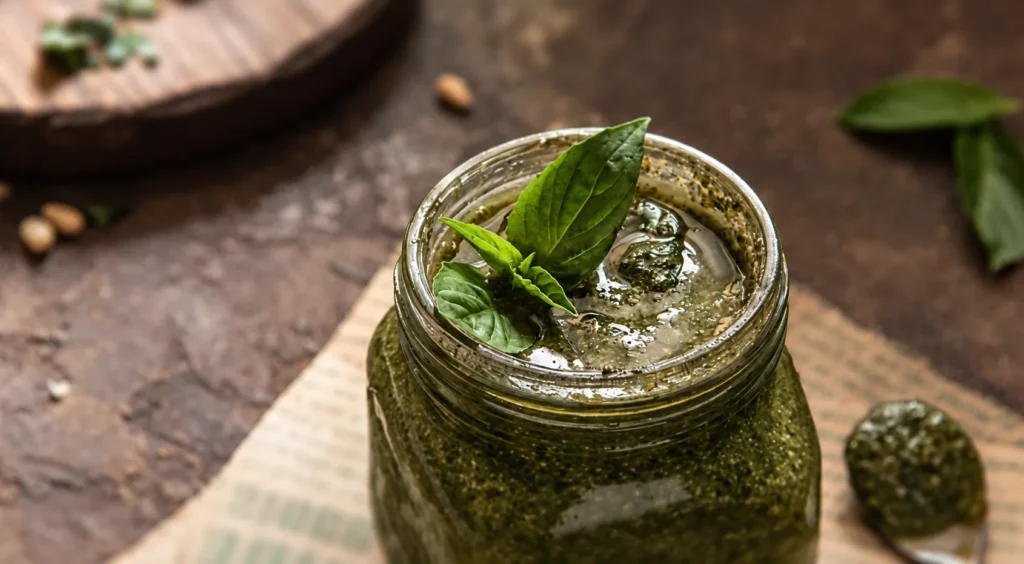

Fresh Basil Pesto
Ingredients
Instructions
-
Thoroughly rinse the basil leaves in a bowl of cold water making sure you rid them of any pests or insects, then lay each individual leaf on a paper towel to dry.
-
To help dry the basil leaves for the fresh pesto place a paper towel on top of all them and press down very gently. This will help dry the leaves and absorb all the excess water.Dry the basil thoroughly but gently. Excess water dilutes the pesto and encourages a watery emulsion, while bruising the leaves can darken them before blending.
-
Blend oil and garlic to gain a smooth, creamy consistency before adding the pine nuts and once more blending.Pulse in short bursts rather than running the blender continuously; excessive blending warms the mixture and can dull the fresh basil flavour and colour.
-
Next add the basil leaves, a pinch of salt, 2 more tbsp oil and blend for 20 seconds then add the Parmiagiano Reggiano and blend for a further 30 to 45 seconds. If you need to scrape the edges to get the last few bits of cheese do so, then mix through using a tablespoon.
-
Using a teaspoon, taste the pesto for salt and overall flavour, if it is too salty, add a touch extra basil and oil before pulsing until you’re happy with the taste. Decant it to a sterilised jar sealed tight and keep it in the fridge.This is a fresh refrigerated pesto, not a shelf-stable preserve. Keep it chilled and use clean utensils each time rather than relying on jar sterilisation to make it safe for room-temperature storage.
-
Use it as often and however you desire.
