Take the 5 spice, garlic powder, zest of the whole lemon, salt and cornflour, and place them in a bowl, whisking thoroughly until fully combined.
2 Add all the diced chicken into the bowl mixture and completely coat by hand, this may take several minutes to ensure you have all of the chicken covered.
After coating the raw chicken by hand, wash hands and any contacted surfaces before handling cooked chicken, rice or garnishes.
Heat the coconut oil (be aware of the lower smoking point that is identical to sesame oil) in a large wide bottomed Sauté pan or wok until hot then add the chicken, cooking on a medium to hot temperature until crispy and cooked through.
Cook in batches if necessary so the pieces fry rather than steam. Check one of the largest pieces is cooked through to the centre before removing the batch from the pan; crisp coating alone is not a doneness test.
Remove the chicken from the pan using a wire strainer / skimmer ladle if you have one and set aside.
Transfer the cooked chicken to a clean plate or bowl, not the container that held it raw.
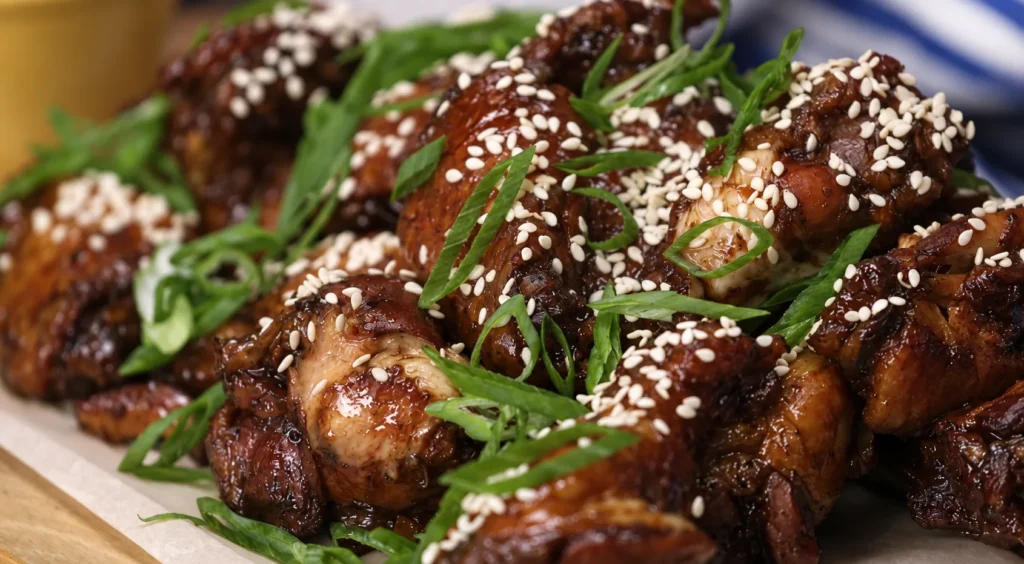
Whisk the honey, aminos and juice from half of the lemon together until incorporated then pour into the pan. Allow to boil for a minute and add the chicken back in along with the sesame seeds and cook for a further 1 or 2 minutes until piping hot.
6 Serve with the style of rice of your choice, stir-fried beansprouts, spring onions and extra coconut aminos drizzled atop.
Servings 4
- Amount Per Serving
- % Daily Value *
- Total Fat 33.17g52%
- Saturated Fat 12.36g62%
- Sodium 625.87mg27%
- Potassium 323.98mg10%
- Total Carbohydrate 17.24g6%
- Dietary Fiber 1.31g6%
- Sugars 0.07g
- Protein 23.88g48%
- Vitamin C 7.74 mg
- Calcium 18.46 mg
- Iron 1.50 mg
* Percent Daily Values are based on a 2,000 calorie diet. Your daily value may be higher or lower depending on your calorie needs.
Note
Coconut aminos* is a dark-coloured sauce that tastes similar to soy sauce. Instead of being made from soy, however, coconut aminos comes from the sap of the coconut plant, not coconuts. After extraction, the sap gets stored and ages. During this time, it ferments due to the natural sugars present within it. Tamari is a Japanese soy sauce made by fermenting soybeans and usually gluten-free. Compared with most soy sauces, it's darker, less salty, and has a strong umami flavour.